5 Best Leaf Blower Gutter Attachments (October 2026)
The best leaf blower gutter attachments include the EGO Gutter Attachment for EGO owners, the Sealegend Gutter Kit for EGO for frequent direction changes, and the Greenworks Gutter Kit for varied gutter heights.
On this page (14 sections)
- Which leaf blower gutter attachment fits your setup?
- Compare the best leaf blower attachments for gutters
- 1. EGO Gutter Attachment: the first choice for compatible EGO owners
- 2. Sealegend Gutter Kit for EGO: choose it for separate steering controls
- 3. Greenworks Gutter Kit: choose it for adjustable extension length
- 4. Black+Decker Gutter Attachment: choose it for quick-connect assembly
- 5. Sealegend Universal Gutter Tool: choose it when you need an adjustable adapter
- How do you choose a leaf blower attachment for gutters?
- Which gutter conditions suit a blower attachment?
- How do you set up a gutter attachment before starting?
- How do you use a leaf blower attachment for gutters safely?
- Which mistakes make gutter attachments less useful?
- How should you clean and store a gutter attachment?
- Which leaf blower attachment for gutters should you choose?
The EGO Gutter Attachment is the best leaf blower attachment for gutters if you own a compatible EGO blower. For another brand, choose a kit that fits your exact outlet and reaches inside the gutter while you keep a comfortable grip.
These attachments work best for loose, dry leaves and light debris in open gutters. Packed sludge, rooted plants, covered channels and blocked downspouts call for a different approach.
For the full process, see how to clean gutters with a leaf blower. Our guide to whether leaf blower gutter attachments work explains which jobs suit airflow and which need physical removal.
Our picks at a glance
-
1

-
2
-
3

- 4
 Check it
Black+Decker Gutter Attachment
Best for quick seasonal assembly - 5
 Check it
Sealegend Universal Gutter Tool
Best for cross-brand setups
Which leaf blower gutter attachment fits your setup?
Choose the EGO kit for a direct brand match, the Sealegend EGO kit for separate steering controls, or a confirmed-fit adapter kit for another blower. Reach matters only after you've established a secure connection.
We compared model compatibility, connection design, reach measurements and nozzle controls. A named model match takes priority over a broad compatibility promise, while useful controls help distinguish kits that fit the same blower.
Before comparing power figures, learn what CFM means on a leaf blower. If you also need a blower, the cordless leaf blower buying guide explains battery, weight and yard-work choices.
Compare the best leaf blower attachments for gutters
Compare fit, usable height and control, rather than choosing the largest reach number. Attachment length, added reach and total working reach measure different things.
| Product | Best for | Attachment length | Connection | Compatibility | Our score |
|---|---|---|---|---|---|
| EGO Gutter Attachment | EGO owners | 8.3 ft | Screw connection tubes | Specified EGO blower models | 8.4 |
| Sealegend Gutter Kit for EGO | frequent direction changes | Specified EGO models; excludes LB4800 | 7.3 | ||
| Greenworks Gutter Kit | varied gutter heights | Confirm exact blower model with Greenworks | 6.9 | ||
| Black+Decker Gutter Attachment | quick seasonal assembly | Quick-connect extension system | 6.8 | ||
| Sealegend Universal Gutter Tool | cross-brand setups | 6.7 |
A longer assembly also gives you more tool to balance and more joints to check. Choose enough length to reach inside the channel, with a holding position you can maintain as you walk along the gutter.
1. EGO Gutter Attachment: the first choice for compatible EGO owners
Choose the EGO Gutter Attachment if your blower appears in its compatibility group and you want a brand-matched kit. Its adjustable nozzle gives you directional control without moving to a universal adapter.
EGO Gutter Attachment
- 8.3 ft length
- Adjustable blower nozzle
- Screw connection tubes
- Fits specified EGO blower models
The first choice for compatible EGO owners who want a brand-matched connection. Its adjustable nozzle helps direct air along the gutter.
Pros
- Adjustable nozzle direction
- Screw-connected tube sections
- Names the compatible EGO models
Cons
- Limited to specified EGO models
- Attachment length does not equal gutter height
It fits the LB5300/LB5302, LB5750, LB5800, LB6150/LB6151, LB6500/LB6504, LB6700/LB6703, LB7650/LB7654 and LB8800/LB8803-2. Read the full model number on your blower rather than relying on its appearance.
The attachment measures 8.3 ft long and uses screw-connected tubes. Start each thread straight and tighten the connections as directed before raising the assembly.
The nozzle adjustment is useful when you need to aim along a gutter run instead of blowing against the outer wall. Lower the tool and disconnect power before making adjustments that require touching the nozzle.
This is the clearest choice for routine seasonal leaf removal with a supported EGO blower. You can focus on gutter height and handling once you've matched the model.
Skip it if your blower isn't included or your gutter layout prevents the nozzle from entering the channel. The Sealegend EGO option below covers the same blower group, so it won't solve a missing model match.
2. Sealegend Gutter Kit for EGO: choose it for separate steering controls
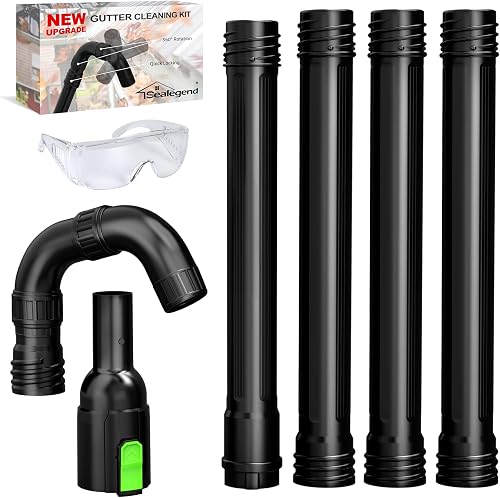
Choose the Sealegend Gutter Kit for EGO when you want to change the tail-wand orientation as well as the nozzle direction. Those separate controls are its main reason to buy over the EGO attachment.
Sealegend Gutter Kit for EGO
- 8.3 ft additional reach
- 360-degree swivel tail wand
- Screw-lock joints
- Gear-locking adjustable tip
Choose this EGO-compatible kit when separate tail-wand and nozzle adjustments suit your gutter layout. It covers specified models and excludes the LB4800.
Pros
- Separate tail-wand and tip adjustments
- Screw-lock tube joints
- Gear-locking nozzle mechanism
Cons
- Only fits specified EGO models
- Does not expand compatibility beyond the EGO pick
The kit has a 360-degree swivel tail wand, an adjustable tip and screw-lock tube joints. The tip uses a gear-locking mechanism to hold the selected angle.
Sealegend describes the reinforced extensions as helping reduce excessive shaking. Treat that as a design aim, and stop if a joint shifts or the raised assembly becomes difficult to steady.
It covers the same EGO model group as the first pick and specifically excludes the LB4800. Its 8.3 ft extension figure should still be considered alongside your holding angle and gutter position.
This kit suits a compatible EGO owner whose gutter runs call for frequent changes in direction. Set the nozzle angle before starting, then use the tail-wand control according to Sealegend's instructions.
Skip it if you expect the swivel features to solve a reach problem. They help with orientation, but they don't make an inaccessible gutter reachable or remove the need for a stable stance.
3. Greenworks Gutter Kit: choose it for adjustable extension length
Choose the Greenworks Gutter Kit when your blower meets its fit requirements and removable sections suit different gutter heights. You can add or remove tubes rather than handle the full extension for every run.
Greenworks Gutter Kit
- Up to 11 ft reach
- Universal adapter
- Removable tube sections
- Requires exact model confirmation
Removable sections suit jobs where you need different extension lengths. Confirm your blower model, airflow and outlet size, especially with a 40V machine.
Pros
- Tube sections can be added or removed
- Universal adapter included
- Adjustable extension length
Cons
- Requires more than 450 CFM
- Outlet diameter limit is 5 in
- 40V compatibility needs confirmation
The kit offers up to 11 ft of reach and includes a universal adapter. Its fit conditions call for more than 450 CFM and a blower outlet up to 5 in in diameter.
Greenworks names 60V and 80V blowers in its fit guidance, while also naming 40V compatibility elsewhere. Confirm your exact model with Greenworks, especially if you have a 40V blower.
Voltage alone isn't enough to choose this kit. A blower must meet the connection and airflow requirements, even if its battery belongs to a named voltage family.
This is a useful option for a confirmed-compatible blower when shorter and taller gutter runs share the same job. Use only the sections needed for the current run, following the assembly instructions.
Skip it if your blower falls below the airflow requirement or you can't confirm adapter fit. The adjustable length won't compensate for a loose connection or an unsuitable blower.
4. Black+Decker Gutter Attachment: choose it for quick-connect assembly
Choose the Black+Decker Gutter Attachment if you want quick-connect extensions and a flexible section for maneuvering. It suits seasonal setup and breakdown, provided the adapter matches your blower.
Black+Decker Gutter Attachment
- Four quick-connect extension tubes
- Flexible tube
- Up to 12 ft conditional working reach
- Blower and extension cord sold separately
Quick-connect extensions suit occasional gutter work followed by storage. The flexible section allows maneuvering, provided the adapter fits your blower.
Pros
- Quick-connect extension system
- Flexible section for maneuvering
- Four extension tubes included
Cons
- Blower and extension cord sold separately
- Maximum reach depends on holding position and user height
The kit includes a gutter nozzle, flex tube, blower tube adapter and four extension tubes. BLACK+DECKER describes it as fitting most lawn-care blowers, including most current BLACK+DECKER models.
Its up to 12 ft working reach assumes a 5 ft 11 in person holding the pole straight at chest level. That number includes the holding setup; it isn't the combined length of the tubes.
The flexible section gives you room to change the relationship between the blower and extension. Keep it arranged without sharp bends or twists that could restrict the air path.
Choose this kit when its connector fits and you prefer quick-connect sections to threaded joints. Check that every section is fully engaged before lifting, especially after taking the tool out of storage.
Skip it if your gutter is only reachable by stretching to match the advertised maximum. The blower and extension cord are sold separately, so this kit also isn't a complete powered cleaning system.
5. Sealegend Universal Gutter Tool: choose it when you need an adjustable adapter
Choose the Sealegend Universal Gutter Tool when you need a cross-brand connection and can confirm the adapter fits your outlet. Its telescopic hose and support structure provide another setup option beyond a dedicated brand kit.
Sealegend Universal Gutter Tool
- About 11 ft effective working range
- Adjustable universal adapter
- Four hard extension tubes
- Telescopic hose
Consider this adjustable-adapter kit when a model-specific attachment isn't available. Check outlet shape and length, and account for its assembled weight before choosing.
Pros
- Adapter designed for most blower brands
- Telescopic hose included
- Two hose installation modes
Cons
- Outlet shape and length affect fit
- Assembled attachment weighs 3.84 lb
Sealegend specifies blower outlets up to 5 in long, a different measurement from the Greenworks diameter limit. It directs you to remove a highly tapered plastic blower tube before attaching the adapter.
The kit includes four hard extension tubes, an adjustable outlet, a telescopic hose and an adapter. Its about 11 ft working range depends on the user, blower length and operating angle.
The assembled attachment weighs 3.84 lb, before you add the blower. Consider whether you can manage both while holding the nozzle above you, rather than judging comfort by the blower alone.
Sealegend says its support structure helps keep the blower and pipe level. Follow the instructions for the chosen hose arrangement and make sure the support is correctly positioned before use.
Skip this kit if the adapter has little straight outlet surface to grip or the combined setup feels hard to balance. A universal connection is useful only when it remains secure as you reposition the tool.
How do you choose a leaf blower attachment for gutters?
Choose by connection, gutter access and handling, in that order. A kit must fit your blower, reach into the channel and remain controllable for the full run.
Check leaf blower gutter attachment compatibility first
Use the model number for a dedicated kit and outlet measurements for a universal kit. Don't assume that sharing a brand, battery voltage or similar tube shape establishes fit.
Inspect the outlet with the blower off and power disconnected. Note whether it is round, tapered, flared or interrupted by a latch, since an adapter needs a suitable surface to attach.
Follow the stated measurement carefully. Length describes how far an outlet extends, while diameter describes its width across the opening; the same number doesn't make those limits interchangeable.
Avoid makeshift reducers or taped connections unless the manufacturer specifically allows them. An attachment that slips when raised is a poor match, even if it seems snug at rest.
Measure access inside the gutter
You need to reach over the lip and into the channel, not merely touch the gutter's outer edge. A roof overhang, deep channel or setback from the wall can change the angle you need.
Measure gutter height from a safe position and consider the ground below the entire run. A flat area at one corner doesn't help if the next section requires standing on a slope or reaching across shrubs.
Check for guards before buying. A nozzle intended to enter an open channel may have no useful access beneath a cover, and blowing across the top won't clear debris trapped below it.
Don't add unsupported tubes to chase a higher roofline. If the required position forces you to lean, raise your arms uncomfortably or lose sight of nearby obstacles, use another cleaning method.
Balance airflow with the job
More blower power doesn't turn wet sludge into loose leaves. Choose sufficient airflow for the attachment's requirements, then use a setting that moves debris without making the assembly hard to control.
Our guide to CFM and MPH differences explains air volume and air speed. Neither figure guarantees success when the nozzle can't reach the material or the gutter is packed solid.
If you're replacing the blower too, use how to choose a leaf blower for your yard to balance gutter work with your other cleanup jobs. Holding a blower with an extension is different from sweeping a driveway.
Which gutter conditions suit a blower attachment?
Use a blower attachment for loose debris in an open, reachable gutter. Choose physical removal or professional help for heavy buildup, restricted access or a drainage problem that blowing can't resolve.
Dry leaves, light twigs and loose roof debris are the most suitable targets. Clearing them before they form a dense mat gives airflow a better chance of moving them out of the channel.
Damp leaves may shift, but soaked layers can cling together. Repeatedly blasting the same patch can scatter lighter material while leaving the blockage in place.
Plants growing in the gutter indicate more than a loose leaf problem. Their roots and the material around them need removal, and you should arrange a way to inspect the channel afterward.
A gutter that looks clear can still have a blocked downspout. Don't aim a pile toward the outlet and assume it will pass through; moving the obstruction into a pipe makes the next step harder.
Watch drainage during later rainfall from a safe ground position. Overflow or standing water after cleaning calls for closer inspection of the outlet, gutter slope or another fault.
How do you set up a gutter attachment before starting?
Assemble and check the kit on the ground with power disconnected. Confirm the connection, nozzle angle and full-tool balance before placing the outlet over the gutter.
Inspect each part. Look for cracked tubes, damaged threads, loose locks or a distorted adapter that could prevent a secure joint.
Prepare the blower outlet. Remove only the parts specified by the attachment instructions, then clear dirt from the connection surfaces.
Build the required length. Engage each joint fully without forcing threads or leaving a quick-connect section partly attached.
Set the air direction. Aim along the channel toward a clear discharge area, rather than toward a window or directly down the downspout.
Check your grip. With power still disconnected, hold the complete assembly in its planned position and confirm you can lower it under control.
Choose a dry period with manageable wind. Wind blowing toward you can return dust and leaves to your face, while strong gusts make a long extension harder to hold steady.
Move cars, furniture and loose items out of the debris area. Close nearby doors and windows, and keep other people and pets away from the full run you're cleaning.
For a corded blower, plan the cord route before lifting the tool. Follow the blower's electrical instructions and keep the cord clear of your walking path.
How do you use a leaf blower attachment for gutters safely?
Work from firm, level ground, wear eye and hearing protection, and keep clear of overhead wires. Stop whenever you lose balance, the connection moves or the nozzle catches on the gutter.
Start at a lower power setting if your blower offers one. Increase airflow only as needed, watching how the tube reacts and where debris falls.
Work in short sections and reposition your feet instead of reaching sideways. Lower the attachment before moving around corners, passing obstacles or walking to another gutter run.
Keep the nozzle aimed along the channel without pressing it against the gutter. Don't use the tube as a hook, scraper or lever to free stuck material.
Stay out of the fall path as much as the layout allows, and wear clothing that protects you from falling grit. Stop if dust obscures your view or debris begins blowing toward people or property.
Lower the assembly and disconnect power before checking a blockage, tightening a joint or touching the nozzle. Never reach into an attachment while the blower could start.
Use these extensions from the ground rather than adding them to a ladder setup. If the job needs more height, arrange a different tool or service.
Our guide to using a leaf blower the right way covers general control and cleanup habits. For damp buildup, the wet-leaf guide helps you decide when to stop blowing.
Which mistakes make gutter attachments less useful?
The biggest mistakes are buying by reach alone, forcing an adapter fit and treating every blockage as a blower job. Correct those choices before spending time on repeated passes.
- Comparing unlike reach figures. Tube length and total working reach aren't the same measurement, so use the holding conditions behind each number.
- Assembling every section automatically. Extra length adds more tool to manage; use the configuration allowed for the height you're cleaning.
- Starting at maximum power. A sudden blast can spread debris widely before you've established control and direction.
- Pushing leaves toward the downspout. Clear material out of the channel rather than packing it into the outlet.
- Working beyond a comfortable stance. Move your feet or stop instead of leaning to finish the last patch.
- Ignoring what remains. A cleared top layer can hide sludge underneath, so don't assume one pass has restored drainage.
If leaves stop moving, lower the tool and assess the cause. A blocked nozzle, loose connection and compacted gutter each need a different response; more throttle isn't the answer to all three.
How should you clean and store a gutter attachment?
Disconnect power, remove trapped debris and let the parts dry before storage. Clean connection surfaces help threaded joints, adapters and locks assemble properly the next time.
Follow the kit's care instructions for wiping or washing parts. Keep water away from the blower, battery and electrical connections, and don't use solvents unless the manufacturer permits them.
Remove grit from threads and locking areas with a soft brush. Don't force a joint that resists assembly, since trapped dirt or misaligned threads can damage the connection.
Inspect the adapter and flexible sections for splits or deformation. Replace damaged parts rather than relying on tape to hold a raised assembly together.
Store the tubes supported so they aren't bent beneath other tools. Keep the adapter, nozzle and connectors together, then repeat the fit check at the start of the next cleaning session.
Which leaf blower attachment for gutters should you choose?
Buy the EGO Gutter Attachment for a compatible EGO blower unless you specifically want the Sealegend EGO kit's separate swivel controls. For another blower, let confirmed adapter fit decide before comparing reach.
Choose Greenworks for removable extension sections after confirming its model and airflow requirements. Pick BLACK+DECKER if you prefer quick-connect assembly, or consider the Sealegend Universal tool when its adjustable adapter and combined weight suit your setup.
Skip a leaf blower attachment for gutters if the channel is covered, beyond comfortable reach or filled with compacted material. Once you've chosen a suitable kit, follow the gutter-cleaning setup guide to plan the job from the ground.
Our top 3 picks at a glance
-
1
-
2
-
3
Frequently asked questions
Can a leaf blower attachment clean gutters from the ground?
Yes, a gutter attachment can clear loose leaves from an accessible gutter while you stand on the ground. It needs a secure blower connection and enough usable reach to aim inside the channel.
It won't repair poor drainage or reliably remove packed sludge, and you still need to keep clear of falling debris.
Are gutter attachments universal?
Some gutter attachments use adjustable universal adapters, but no universal label guarantees a secure fit on every blower. Check the outlet's shape and dimensions, plus any airflow requirement.
A kit that names your exact blower model is a simpler starting point than one that requires you to judge the adapter fit.
How much reach do I need for a gutter attachment?
You need enough reach to place the nozzle over the gutter edge while keeping a balanced stance and a comfortable grip. Compare working reach with working reach, because tube length alone excludes your holding position.
Leave room to angle the nozzle into the channel rather than merely touch the outside edge.
Can a leaf blower remove wet leaves from gutters?
A blower can move some damp leaves, but wet mats and heavy sludge often need physical removal. Loose, dry debris is the better job for these attachments.
If repeated passes don't shift a patch, stop and choose another method rather than forcing more air into it; our wet-leaf guide explains the limits.