How to Use a Leaf Blower the Right Way
Here's how to use a leaf blower: start with low airflow and guide small groups of leaves toward a planned collection spot. Wear eye and hearing protection, work with the wind, and collect piles before they scatter.
On this page (10 sections)
- How do you use a leaf blower step by step?
- Which leaf blower should you choose for your yard?
- What should you check before starting?
- How should you aim the nozzle?
- How do you adjust for grass, pavement, and garden beds?
- Which hearing protection suits leaf blower work?
- Which mistakes cause scattered leaves and wasted effort?
- When should you use a rake or leaf vacuum instead?
- How do you finish cleanup and care for the blower?
- How to use a leaf blower well: choose your next step
Here's how to use a leaf blower: start with low airflow and guide small groups of leaves toward a planned collection spot. Wear eye and hearing protection, work with the wind, and collect each pile before moving on.
The aim is to roll leaves across the ground, keeping them close together. A rake, tarp, and yard-waste container make the final collection easier.
How do you use a leaf blower step by step?
Clear a route, choose a collection spot, and work in short sections. Read your blower's manual for its starting procedure, required clearances, and shutdown steps.
- Put on eye and hearing protection, closed-toe shoes, and suitable yard clothing.
- Remove stones, sticks, toys, and other objects the airflow could throw.
- Choose a collection spot away from roads, drains, doors, and neighboring property.
- Check the wind and start on the side that lets it help move leaves toward that spot.
- Start with low airflow on a small patch, then adjust only as needed.
- Sweep loose leaves into small rows and move each row toward the collection area.
- Collect the leaves before the pile becomes difficult to control.
- Shut down fully before setting the blower aside or making adjustments.
Keep a firm grip and a balanced stance, with the intake away from loose clothing and hair. Walk at a pace that lets you see what the airflow uncovers.
Which leaf blower should you choose for your yard?
Choose for the area, debris, and weight you'll carry, then consider the power source. Variable airflow is useful when one route includes open lawn, a patio, and planted edges.
A corded blower suits a compact yard within safe extension-cord reach. Check the manual's cord requirements and plan the route so the cord stays out of your walking path.
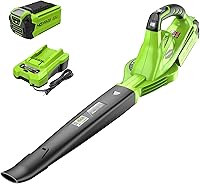
A cordless model suits routes around trees, beds, and separate paved areas. Compare the complete weight with its battery attached, and allow for charging between longer jobs.
Gas can suit extended work away from electrical power, provided you're willing to handle fuel and engine care. Operate fuel-powered equipment outdoors, away from doors, windows, and enclosed spaces.
Air volume helps move groups of leaves, while air speed helps loosen debris. Read what CFM means on a leaf blower and CFM vs MPH on a leaf blower before comparing headline numbers.
For a yard-based choice, use our guide to how to choose a leaf blower. Check local operating hours before choosing when to run it.
What should you check before starting?
Check the blower, power source, and work area before fitting your protective gear. Don't operate equipment with damaged parts, a loose tube, or a blocked intake.
With the power isolated as instructed, confirm that the tube and any approved attachment are secure. Check your footing for holes, slippery leaves, and uneven edges.
For cordless equipment, use the correct battery and confirm it locks into place. With corded equipment, inspect the cord and connections, keeping them clear of water and following the manual's electrical precautions.
For gas equipment, follow the specified fuel instructions and refuel only with the engine off and cool. Don't start if you find a fuel leak.
How should you aim the nozzle?
Angle the nozzle along the ground so leaves roll forward. Keep enough distance to move a group without blasting its center apart.
Begin behind the leaves and sweep across their back edge. If they shoot upward, ease off the airflow, change the angle, or move the nozzle farther away.
Work from the far side of a driveway toward your collection spot. Near a wall or fence, use short, angled passes so airflow doesn't send leaves bouncing back over cleared ground.
How can you control airflow when using a leaf blower?
Use the lowest setting that keeps leaves moving. Increase it briefly for a stubborn patch, then reduce it once the leaves break free.
Keep the nozzle moving rather than holding it on bare ground. If more power produces dust without moving the leaves, stop and loosen them with a rake.
How do you adjust for grass, pavement, and garden beds?
Use broad passes on open grass and gentler airflow near loose ground cover. Change your approach as soon as the surface changes.
On a lawn, move thin layers toward an edge instead of pushing a deep wall of leaves. Thick piles become harder to move and can spill sideways.
On pavement, remove loose leaves before dealing with stuck patches. Use a broom for grit, and keep airflow away from parked cars and windows.
Around mulch, gravel, seedlings, and exposed soil, switch to a rake or hand collection. Trying to separate leaves from lightweight ground cover with strong airflow often creates extra work.
For damp clumps, see whether a leaf blower works on wet leaves. Wet mats usually need loosening before airflow can help.
Which hearing protection suits leaf blower work?
Choose ear muffs that seal fully around your ears and stay comfortable with your eye protection. Fit matters more than choosing by the largest noise-reduction number.
ProCase Ear Muffs: for adjustable, shared yard gear
The ProCase pair suits a household that wants a foldable set with an adjustable metal frame. Its padded headband and cushioned ear pads give you room to adjust the position around each ear.
Choose these if headband adjustment and compact storage are your main needs. Skip them if you need a separately selectable larger size, and check the cushion seal with your glasses on.
Pro For Sho Ear Muffs: for carrying between jobs
Pro For Sho suits someone who wants a compact pair with less weight to carry. At 7.2 oz, it weighs less than the Decibel Defense pair here.
The snug fit may feel tight at first; Pro For Sho recommends placing the muffs over their box for 2–4 hours or overnight to ease it. Skip the Standard version if you need the separate Large option.
Decibel Defense Ear Muffs: for adjustable ear-cup positioning
Decibel Defense suits buyers who want ear cups that slide on metal supports to position around the ears. The orange pair is Regular size, while XL is available only in black.
Choose these if that adjustment suits your head and you accept the 11.7 oz weight. Skip them if low weight is your priority or you need an orange XL pair.
For any pair, keep hair and hat edges out from under the cushions. Stop the blower before removing protection to speak, and keep the cushions clean and dry according to the care instructions.
A quieter power source still needs suitable precautions; read whether battery leaf blowers are quieter than gas when comparing tools.
Which mistakes cause scattered leaves and wasted effort?
Too much airflow, oversized piles, and working against the wind cause most avoidable mess. Change your method before reaching for more power.
Don't blow into the middle of a finished pile. Approach from behind its loose edge, and transfer it to a tarp or container once it stops moving as a group.
Avoid chasing individual leaves across the whole yard. Finish each section, then use a rake for stragglers and tight corners.
Stop if dust rises, visibility drops, or debris reaches other people. Never use the blower for animal waste, unknown powders, or loose material that could harm someone if airborne.
When should you use a rake or leaf vacuum instead?
Use a rake for wet mats, delicate beds, and small patches. It gives you closer control when moving leaves would also disturb soil or mulch.
A vacuum may suit scattered leaves where collection matters more than pushing them across an open area. Compare leaf blower vs leaf vacuum before choosing a tool for that job.
Keep a rake nearby even when blowing an open lawn. It can loosen a stuck patch and gather the final pile without another round of scattering.
How do you finish cleanup and care for the blower?
Collect the leaves, isolate the power, and clear loose debris before storage. Follow local yard-waste rules and your manual's shutdown procedure.
Wait for moving parts to stop before checking the intake or tube. Disconnect power or prevent an accidental start as instructed before removing trapped leaves.
Wipe down the exterior and inspect for loose or damaged parts. Follow the manual for battery storage, cord storage, or engine care, and put equipment away dry.
For another seasonal task, see how to clean gutters with a leaf blower. Use approved attachments from a safe ground position rather than operating from a ladder or roof.
How to use a leaf blower well: choose your next step
Use a blower for open areas of loose leaves, and keep a rake for close work and stubborn patches. If leaves scatter, reduce airflow and shorten the section you're moving.
Choose ProCase for adjustable shared gear, Pro For Sho when lower weight matters, or Decibel Defense when its sliding ear cups suit your fit. Keep whichever pair you choose with your eye protection so both are ready before startup.
For a cordless setup matched to your route and workload, read the complete cordless leaf blower buying guide.
Frequently asked questions
How do you use a leaf blower without scattering leaves?
Use low airflow and sweep small groups toward one collection spot. Keep the nozzle angled along the ground, work with the wind, and approach each group from behind.
If leaves fly upward or split apart, ease off the trigger and increase the nozzle distance before making another pass.
Should you use a leaf blower on wet leaves?
A blower can move loose, damp leaves, but a rake is usually better for wet mats stuck to grass or pavement. Break up clumps before deciding whether airflow will help finish the job.
Read our guide to using a leaf blower on wet leaves for more guidance.
Do you need hearing protection with a leaf blower?
Wear well-fitting hearing protection while operating a leaf blower, and follow the blower manual's instructions. Each ear cup should surround your ear with an unbroken cushion seal.
Hair, hats, and thick eyeglass arms can create gaps, so check the fit while wearing your eye protection before starting.
What should you not do with a leaf blower?
Don't direct airflow toward people, pets, traffic, windows, or open doors. Avoid blowing gravel, loose soil, or unknown debris that could become airborne.
Keep the intake clear of clothing and hair, and shut down and isolate the power source as instructed before reaching near a blockage or removing a tube.