How Many CFM Do You Need in a Leaf Blower?
CFM on a leaf blower means cubic feet per minute, the volume of air it moves each minute. Choose airflow for your leaf load and surface, then compare air speed, controls, and battery needs.
On this page (9 sections)
- What is CFM on a leaf blower?
- How much CFM do you need in a leaf blower?
- Does CFM or MPH matter more?
- Which blower fits your cleanup?
- How should you set up and use the airflow?
- Can more CFM handle wet leaves?
- Does higher CFM use more battery?
- What mistakes should you avoid when comparing CFM?
- Which CFM should you choose for your leaf blower?
CFM on a leaf blower means cubic feet per minute, the volume of air the tool moves each minute. More airflow helps push wider groups of leaves, but your surface, leaf load, and speed controls determine how much you need.
Start with the cleanup you do most often. Sweeping a porch calls for a different blower than gathering deep leaves across grass, even if both jobs happen on the same property.
What is CFM on a leaf blower?
CFM measures air volume, so a blower rated at 400 CFM moves 400 cubic feet of air per minute at that rated setting. It doesn't measure how fast the air travels or how long the battery lasts.
Think of airflow as the amount of air available to keep a group of leaves moving. A larger stream is useful across open ground, where a narrow jet could push a few leaves while leaving the rest behind.
Check whether a stated figure applies to normal operation or a boost mode. A maximum airflow number describes peak output, not necessarily the setting you'll use throughout a cleanup.
What does a leaf blower's CFM tell you about cleanup?
A blower's CFM helps you judge how much leaf material it can push at once. Moving loose leaves across pavement takes less effort than moving the same leaves tangled in grass.
Use the figure to narrow your choices, then compare air speed and controls. You need enough push for your regular job and enough adjustment to work near beds, steps, and parked items.
How much CFM do you need in a leaf blower?
Use 100–400 CFM for light cleanup and higher airflow for deeper piles or broader lawn work. These ranges are starting points, not strict limits based on property size.
| Yard or task | CFM range to consider | Main buying priority |
|---|---|---|
| Small patio or porch | 100–300 | Gentle control for loose, dry debris |
| Small yard or driveway | 200–400 | Enough airflow for routine leaf gathering |
| Medium lawn or deeper piles | 400–600 | Sustained airflow across grass |
| Large leaf loads or broad cleanup areas | 600+ | Higher output with a suitable battery setup |
Choose for leaf load before acreage. A small lawn under several trees can need more airflow than a larger property with only a few leaves along its driveway.
Also consider how often you clear leaves. Frequent light passes are easier to manage with a smaller blower than one large cleanup after leaves have settled into thick layers.
For a whole-property decision, see what size leaf blower you need for your yard. Include paths, fenced corners, and the distance to your collection point when planning the job.
Does CFM or MPH matter more?
CFM describes volume, while MPH describes speed, and useful leaf clearing needs both. Air speed helps dislodge debris, while airflow helps carry groups of leaves onward.
A narrow nozzle focuses the stream on a smaller target. That can help along edges and cracks, but it doesn't turn a low-volume sweeper into a blower suited to deep lawn piles.
Compare figures from the same operating mode where possible. Don't assume a blower's maximum CFM and maximum MPH occur together unless the brand gives them as a matched pair.
Read CFM vs MPH for leaf blowers for a closer explanation of how air volume, speed, and nozzle shape work together.
Which blower fits your cleanup?
Choose the Greenworks 40V for light sweeping, EGO LB6151 for mixed yard work, or Greenworks 80V for heavier leaf loads. Their controls and airflow suit different jobs, so buying the highest-output option isn't necessary for every home.
Greenworks 40V: for patios and short cleanup sessions
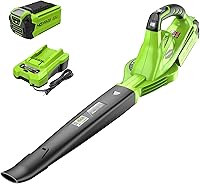
The Greenworks 40V Blower suits porches, decks, and paved areas where loose leaves need a controlled push. Its variable speed dial and concentrator nozzle help you direct air into corners and along edges.
The kit includes a 2.0 Ah battery and charger, so it suits someone starting with a cordless sweeper. Choose it for frequent light cleanup rather than letting leaves build into a deep layer.
Skip it as your main blower if you regularly clear thick leaves from grass or large damp piles. Those jobs call for more air volume than this sweeper-style tool is meant to provide.
EGO LB6151: for mixed lawn and driveway work
The EGO LB6151 suits homeowners who need both controlled sweeping and extra output for piles. Its lock-on control holds a chosen setting, and the included tapered nozzle focuses the stream.
The kit includes a 2.5 Ah battery and charger. EGO claims up to 75 minutes per charge, but that figure shouldn't be used to plan a full session at maximum output.
Choose this model when you move between pavement, grass, and leaf piles during one job. Skip it for porch-only cleanup, where a smaller sweeper may meet your needs.
For longer sessions, read how long leaf blower batteries last before deciding whether one battery fits your routine.
Greenworks 80V: for broad piles and heavier cleanup
The Greenworks 80V 700 CFM suits larger leaf loads and open areas where moving a broad group of leaves matters. It pairs that airflow with up to 170 MPH air speed.
Variable speed lets you ease off around borders, while cruise control holds your chosen output. The kit includes a 2.5 Ah battery and charger.
Choose it when lighter sweeping isn't your main task. Skip it for a small deck or narrow porch, and plan battery needs separately if your cleanup involves long periods at high output.
How should you set up and use the airflow?
Start at low speed with a clear collection point, then raise output only when the leaves stop moving. Planning where the pile will end saves more effort than repeatedly pushing it back and forth.
Before starting, fit the tube and nozzle securely, check the air intake for blockage, and use a compatible charged battery. Wear eye and hearing protection, and keep people and pets outside the work area.
Work with the wind when possible. Hold the nozzle low enough to move leaves along the surface, and sweep gradually toward a tarp, collection area, or manageable row.
Keep the stream near the edge of a growing pile instead of blasting into its center. Split a deep pile into smaller sections if it stops moving.
Use less airflow near gravel, mulch, and bare soil. Our guide to using a leaf blower the right way covers technique for different parts of the yard.
Can more CFM handle wet leaves?
More airflow helps with wet leaves, but smaller sections and loosened clumps matter too. Damp leaves stick together and cling to grass, so they take more effort than loose, dry leaves.
Wait for leaves to dry when practical. If you need to clear them sooner, loosen packed mats with a rake and blow shallow layers rather than trying to move the whole pile.
Don't use extra output to drive debris toward roads, people, or windows. See how to use a leaf blower on wet leaves for help deciding when blowing or raking makes more sense.
Does higher CFM use more battery?
Higher output generally drains the same blower's battery faster than a lower setting. Across different tools, airflow alone can't predict runtime because the motor, battery, and operating mode also change.
Reserve boost modes for resistant patches. Use steady, moderate airflow for leaves that are already moving, and release the trigger while walking between cleanup areas.
Don't compare battery Ah figures alone across different voltage systems. Look for runtime information tied to an operating setting close to the one your job requires.
Battery power also calls for sensible working hours and hearing protection. Read our guide to battery leaf blower noise if nearby homes are part of your buying decision.
What mistakes should you avoid when comparing CFM?
Avoid buying by peak airflow alone or assuming a bigger number will solve poor technique. A useful blower also needs controls you can manage and a battery setup that fits your work.
- Choosing only by yard size: Count the trees and leaf buildup, and note whether you're clearing grass or pavement.
- Expecting maximum runtime at maximum output: Match runtime claims to the stated operating mode.
- Using full power everywhere: Reduce speed around beds and loose ground cover.
- Ignoring handling: Consider the complete tool with its battery attached, especially for longer sessions.
- Blowing one oversized pile: Gather leaves in smaller sections before the pile becomes hard to move.
For care, remove the battery before clearing a blockage or cleaning the intake. Keep vents clear, store the tool dry, and follow the battery instructions for charging and storage.
Use the cordless leaf blower buying guide to compare battery setup and controls alongside airflow.
Which CFM should you choose for your leaf blower?
Now that you know what CFM on a leaf blower means, choose for the job you repeat most often. Buy enough airflow to handle that task, with speed control for the lighter work around it.
Pick the Greenworks 40V Blower for loose debris on patios and paths. Pick the EGO LB6151 for a mix of lawn clearing and pavement, or the Greenworks 80V 700 CFM when broad piles are a regular part of cleanup.
Before ordering, compare both airflow measures in our leaf blower airflow guide. Then make sure the included battery setup suits the time you expect to spend clearing leaves.
Frequently asked questions
What does CFM mean on a leaf blower?
CFM means cubic feet per minute, which measures the volume of air a leaf blower moves each minute. More airflow helps push wider groups of leaves, while MPH describes air speed.
Compare both figures at the same operating setting, along with the nozzle and speed controls.
Is higher CFM always better for a leaf blower?
No, higher CFM is useful for broad piles and heavy leaf loads, but a small patio may need only gentle airflow. Too much power can scatter mulch or break up a pile you've already gathered.
Choose adjustable output and enough airflow for your regular cleanup.
How much CFM is enough for a small yard?
Around 200–400 CFM is a useful starting point for a small yard with loose, dry leaves. A patio alone may need less, while thick leaves caught in grass may need more.
Base your choice on the leaf load and surface rather than yard size alone.
Should I choose CFM or MPH?
Compare CFM and MPH together rather than choosing one number. Air volume helps move groups of leaves, while air speed helps dislodge debris.
A narrow nozzle can concentrate the stream, but clearing a broad lawn also needs enough airflow to keep leaves moving toward your collection point.