How to Choose a Leaf Blower for Your Yard
To learn how to choose a leaf blower, match airflow, power source and working weight to your usual cleanup. Choose a light sweeper for loose debris on hard surfaces, or higher airflow for lawn leaves and damp piles.
On this page (11 sections)
- How to choose a leaf blower for your usual cleanup
- What do CFM and MPH tell you?
- Which of these leaf blowers fits your work?
- Should you choose battery, corded electric or gas?
- How much battery runtime do you need?
- How do weight and controls affect comfort?
- How should noise affect your choice?
- How should you set up and use a new blower?
- What changes when leaves are wet or caught in grass?
- How do you care for a blower and avoid buying mistakes?
- How to choose a leaf blower you'll use regularly
Learning how to choose a leaf blower starts with matching airflow to your debris, then checking power source, working weight and runtime. Loose leaves on a patio need a different tool than damp piles caught in grass.
Before comparing models, list the surfaces you clear, the leaves you move and where you'll collect them. Those details matter more than choosing the highest air speed.
For a starting point based on your property, see what size leaf blower you need for your yard.
How to choose a leaf blower for your usual cleanup
Choose for the hardest job you do regularly, while keeping enough control for quick, light work. A rare storm cleanup shouldn't dictate every feature, but weekly lawn leaves deserve more power than an occasional porch sweep.
Yard size affects walking distance and work time. Tree cover, leaf depth and surface type determine how much effort it takes to move the debris.
| Your usual job | What to prioritize |
|---|---|
| Loose leaves on a porch or patio | Low working weight and adjustable airflow |
| Grass clippings on paths | Easy controls and a directed air stream |
| Leaves scattered across a lawn | More air volume for broad passes |
| Damp piles under trees | Higher airflow and a plan to loosen packed leaves |
| Several areas in one session | Runtime, charging arrangements and comfortable handling |
| Tight corners around outdoor furniture | Compact size and control at low speed |
Also decide how you'll finish the job. A blower gathers leaves, but you still need a collection point, bags, a compost area or another way to remove the pile.
Choosing a leaf blower for mixed jobs
Choose adjustable speed when your route includes both open areas and delicate edges. Lower airflow helps around mulch and gravel, while a higher setting helps move leaves across grass.
Map a normal cleanup route before buying. Include the walk between areas, narrow gates and corners where leaves collect, rather than judging the job from lawn area alone.
You can compare more battery options in our complete cordless leaf blower buying guide.
What do CFM and MPH tell you?
CFM measures air volume, while MPH measures air speed. Start with air volume for broad leaf cleanup, then consider speed and nozzle shape for directing debris.
Think of CFM as the amount of air available to push a swath of leaves. MPH describes how fast that air moves, which helps explain the focused stream from a narrow outlet.
A high MPH figure paired with low air volume can suit small, directed tasks. It doesn't make a compact blower the right choice for moving deep leaves across a lawn.
Compare maximum figures with maximum figures. A normal-speed airflow number beside another tool's turbo number gives an uneven picture of their everyday settings.
For more detail, read how many CFM you need in a leaf blower and our CFM vs MPH comparison.
Which of these leaf blowers fits your work?
Choose the Greenworks 40V for light sweeping, EGO for mixed yard cleanup, Greenworks 80V for higher airflow, or DeWalt for compact spot work. The right fit depends on how often you move lawn leaves versus loose debris on hard surfaces.
These options show why buying by voltage or air speed alone can lead to the wrong tool.
Greenworks 40V Blower: choose it for patios and paths
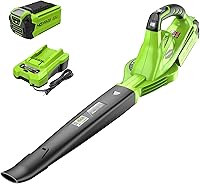
The Greenworks 40V suits loose leaves and clippings on patios, decks, porches and driveways. Its 135 CFM airflow, 150 MPH air speed and concentrator nozzle favor directed sweeping.
A variable speed dial lets you reduce airflow near doorways or planting beds. The kit includes a 2.0Ah battery and charger, making it a complete starting setup.
Choose it if you clean little and often before leaves build into thick layers. Its role is keeping hard surfaces clear without carrying a larger yard blower for every small task.
Skip it as your main blower if most work involves damp leaves buried in grass. More air volume is the better starting point for that routine.
EGO LB6151: choose it for mixed yard cleanup
The EGO LB6151 suits homeowners who clear paths after mowing and also gather leaves from the lawn. It offers adjustable airflow from 200 to 480 CFM, plus turbo output up to 615 CFM and air speed up to 170 MPH.
Its lock-on control holds a chosen setting, and the included tapered nozzle directs the stream. A 2.5Ah battery and charger come with the tool.
Choose it when you want one blower for routine hard-surface work and more demanding leaf cleanup. Existing EGO users can also use compatible 56V ARC Lithium batteries.
Skip it if your only job is a tiny porch, or if its working weight is uncomfortable. For long sessions, plan battery use rather than expecting continuous turbo operation from one charge.
Greenworks 80V 700 CFM: choose it for broad leaf cleanup
The Greenworks 80V suits buyers who need higher air volume for larger cleanup areas and regular damp leaves. It provides 700 CFM and 170 MPH, with variable speed, turbo and cruise control.
The kit includes a 2.5Ah battery and charger. Its brushless motor and speed controls make it an option for buyers who want battery power for substantial yard work.
Choose it when shifting leaves across open areas is your main task. Cruise control can hold a chosen setting during longer passes without keeping the trigger squeezed.
Skip it if nearly all your work happens around loose mulch, gravel or a small entryway. Also confirm its complete working weight and plan for charging before choosing it for long sessions.
DeWalt 20V Compact Blower: choose it for confined spaces
The DeWalt suits small cleanup areas where a compact tool is easier to position. It has 100 CFM airflow, a 3-speed switch, a variable speed trigger and a trigger lock.
It includes 3 nozzle attachments and comes as a bare tool. You'll need a compatible battery and charger.
Choose it for short, directed jobs around outdoor work areas and tight corners, especially if you already have a compatible DeWalt setup. Its compact shape serves a different purpose from a high-volume yard blower.
Skip it as your primary tool for broad lawn cleanup or dense leaf piles. The smaller air volume favors spot work rather than moving a wide swath of leaves.
Should you choose battery, corded electric or gas?
Choose battery power for freedom of movement, corded electric for reachable work areas, or gas for jobs where refueling suits your routine. Match the power source to the whole cleanup route, including storage and care.
Battery blowers avoid a trailing cord and fuel handling. Their main planning needs are charged batteries, suitable charging space and enough capacity for the work.
Corded electric can suit a patio or driveway near an outlet. Check the manual's extension-cord requirements, outdoor suitability and maximum length before deciding that every corner is within reach.
A cord can catch around furniture or pull across planting beds. Include those obstacles when judging convenience, rather than measuring only the straight distance from an outlet.
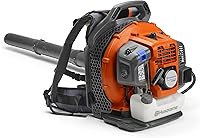
Gas can suit long jobs when stopping to refuel is practical. It also brings engine care, fuel storage and exhaust, so choose it for a clear work need.
Our electric vs gas leaf blower guide explains these trade-offs in more detail.
How much battery runtime do you need?
Plan for your active blowing time and the speed you'll use, with a charging or battery-swap option for longer jobs. Maximum runtime claims usually don't describe continuous high-output work.
EGO claims up to 75 minutes for the LB6151 with its included battery. EGO also gives a 50-minute charge time with the included CH2100 charger.
Use lower power for loose debris and reserve turbo for patches that need it. Holding turbo throughout the route uses battery capacity where a gentler setting could do the job.
Don't compare amp-hours across different voltage platforms as a direct runtime ranking. Battery energy, motor demand and speed setting all affect how long a blower runs.
A spare battery makes sense when cleanup regularly exceeds one charge. First check whether a compatible battery from another tool will be available, rather than assuming it's always free.
For a closer look at runtime and battery aging, see how long leaf blower batteries last.
How do weight and controls affect comfort?
Choose a blower you can carry, aim and stop comfortably with the battery installed. Balance and grip position matter alongside the weight number.
The DeWalt has a stated weight of 2.5 lb, the Greenworks 40V is 3.3 lb, and the EGO is 7.5 lb. Check whether those figures include the battery before comparing complete setups.
Confirm the complete working weight of the Greenworks 80V as well. A heavier battery changes the load you carry, even when it adds useful capacity.
If possible, hold the assembled tool in a normal working position before committing. Keep your wrist comfortable and check that you can reach the controls without shifting your grip.
Lock-on and cruise controls reduce the need to hold a trigger, but they don't remove the tool's weight. You still need to steer it and keep the intake clear of clothing.
For a long route, short breaks may be more useful than choosing extra airflow you struggle to carry.
How should noise affect your choice?
Check local use rules, working hours and hearing-protection instructions before choosing a blower. Battery power still produces motor and air noise.
The stated sound figures are 53 dB for the Greenworks 40V, 71 dB for the EGO and 74 dB for the Greenworks 80V. Measurement distance and operating conditions affect comparisons, so don't treat these as a direct ranking under identical conditions.
Use the lowest setting that moves the debris and avoid pointing the outlet toward nearby people. Plan work for a considerate time, especially near shared fences or open windows.
Read whether battery leaf blowers are quieter than gas for more context.
How should you set up and use a new blower?
Start with a secure nozzle, a clear route and a planned collection point. Read the model's instructions before charging, fitting attachments or using the controls.
Use this sequence for the first cleanup:
- Prepare the area. Remove stones, pet waste and objects that could become airborne.
- Fit the nozzle securely. Disconnect the battery or power supply before changing attachments.
- Check the intake and outlet. Keep both clear of loose clothing, straps and debris.
- Wear suitable protection. Follow the manual for eye and hearing protection, and wear closed shoes.
- Choose a collection point. Keep leaves out of roads, drains and neighboring property.
- Begin at low speed. Increase airflow only when the leaves stop moving as needed.
Work with a light breeze where possible. Blowing straight into the wind sends leaves back across cleared ground and wastes effort.
Keep the outlet near the surface without scraping it. Use shallow, steady passes to move leaves forward instead of aiming straight down and scattering them upward.
Break a broad area into sections, then bring the rows together. Our guide to using a leaf blower explains the method in more detail.
What changes when leaves are wet or caught in grass?
Use smaller sections and looser layers for damp leaves, and wait for drying when the job allows. Water adds weight, while grass and packed layers hold leaves in place.
Start at the edge of a pile rather than trying to push the whole mass at once. Loosen a matted patch with a rake before using more blower power.
Avoid blasting saturated ground or directing a strong stream into bare soil. You can shift soil and expose roots while making little progress on the leaves.
For regular wet-leaf work, prioritize airflow and manageable battery use over compact size. See our guide to using a leaf blower on wet leaves for more help.
How do you care for a blower and avoid buying mistakes?
Keep air passages clear and batteries stored as the manual directs, then choose features around the jobs you actually do. Battery blowers need routine cleaning even though they don't need engine fuel or oil.
Disconnect power before cleaning or inspecting the nozzle. Brush debris from accessible vents and check the housing and attachments for damage.
Let a warm battery cool as directed before charging. Use the approved charger, keep it dry and follow the battery's storage-temperature and charge guidance.
Avoid these common buying mistakes:
- Choosing by MPH alone. A fast, narrow stream doesn't replace air volume for broad leaf piles.
- Buying voltage as a power ranking. Compare airflow, controls and complete tool design.
- Ignoring kit contents. A bare tool needs a compatible battery and charger.
- Sizing only by property area. Tree cover, grass and damp leaves can make a small yard demanding.
- Overlooking collection. Moving leaves into a larger pile still leaves a disposal job.
- Choosing maximum output over comfort. A tool you struggle to steer makes routine work harder.
Before ordering, confirm battery compatibility, included attachments and warranty terms for the exact model. These details determine whether the blower fits your setup from the first use.
How to choose a leaf blower you'll use regularly
Choose the Greenworks 40V for frequent light sweeping, or the DeWalt for compact spot cleanup when you have compatible battery equipment. Both suit focused tasks better than broad, heavy leaf removal.
Choose the EGO LB6151 for a mix of paths, clippings and lawn leaves. Choose the Greenworks 80V for higher-volume leaf work, provided its working weight and your charging plan suit the route.
The final step in how to choose a leaf blower is checking the whole job: debris, surface, collection point and work time. Buy enough airflow for that routine, with controls and handling you'll be comfortable using.
Use our CFM vs MPH leaf blower guide to compare output, then confirm what size leaf blower you need for your yard.
Frequently asked questions
How do I choose a leaf blower for my yard?
Choose a leaf blower by matching airflow to your usual debris, then check working weight, power source and runtime. A patio sweeper suits loose leaves on hard surfaces, while lawn cleanup and damp piles call for more air volume.
Also plan where the leaves will go.
Is CFM or MPH more important in a leaf blower?
CFM is the more useful starting point for moving broad areas of leaves because it measures air volume. MPH describes air speed and helps explain a concentrated stream.
Compare both alongside nozzle shape and adjustable controls, especially if you switch between open lawn areas and tight corners.
What size leaf blower do I need for a small yard?
Choose a compact sweeper for a small yard when most work involves loose leaves on patios, paths or a driveway. Choose higher airflow if leaves collect in grass or form damp piles.
A small property with dense tree cover can need more blower power than a larger, open yard.
Should I choose a battery or gas leaf blower?
Choose battery power for routine cleanup when one charge or planned battery swaps cover the job. Consider gas for long sessions where refueling fits your routine better than charging.
If every work area is within safe cord reach, a corded electric blower is another option worth comparing.
Does a leaf blower battery come with the tool?
Battery kits include a battery and charger, while bare tools require you to supply compatible ones. The EGO and both Greenworks options here include a battery and charger.
The DeWalt is a bare tool, so check your exact battery model and charger compatibility before choosing it.