Do Leaf Blower Gutter Attachments Actually Work?
Yes, leaf blower gutter attachments work best on loose, dry leaves in open gutters. Choose one that fits your exact blower and reaches the gutter while you keep stable footing and control.
On this page (7 sections)
- When do leaf blower gutter attachments work well?
- What debris should you clear with air?
- How do you choose the right fit and reach?
- Which gutter attachment suits your blower?
- How should you set up and use the attachment?
- What mistakes reduce results or damage control?
- Should you buy a leaf blower gutter attachment?
Yes, leaf blower gutter attachments work best on loose, dry leaves in open gutters you can reach from the ground. They suit routine clearing before debris turns into a wet, packed layer.
The right kit depends on your blower connection, gutter height, and ability to steer the nozzle. Buy for those conditions first, rather than choosing the longest tube.
When do leaf blower gutter attachments work well?
They work well when air can get beneath loose debris and push it out of an open gutter. A curved nozzle brings the airflow over the gutter edge while you stay below.
This makes an attachment useful for regular leaf clearing on accessible rooflines. It is less useful for neglected gutters full of mud, rooted plants, or compacted material.
Gutter guards can also block access to the trough. If a cover prevents the nozzle from directing air into the debris, blowing across its top won't clean the gutter beneath it.
Do leaf blower gutter attachments work on downspout clogs?
They are poor tools for a packed downspout clog because the nozzle works at the gutter opening, not through the full pipe. Blowing more leaves toward a blocked outlet can add to the obstruction.
Clear loose material away from the outlet rather than feeding it into the opening. A gutter that looks empty from below may still have a drainage problem that needs a separate inspection.
What debris should you clear with air?
Aim for dry leaves and light, loose buildup, and use another method for heavy material that needs lifting out. A few damp leaves may move, but a wet mat can stay stuck to the gutter.
Don't keep increasing power when nothing shifts. Stop and assess whether the problem is poor aim, a blocked nozzle, or debris that air alone won't remove.
Timing helps: routine clearing during a dry spell is a better match than waiting until leaves have soaked and settled. Read whether a leaf blower can handle wet leaves before tackling damp buildup.
Plan for cleanup below, too. Blowing empties the gutter by scattering debris, so move fragile items, close nearby windows, and keep people and pets outside the discharge area.
How do you choose the right fit and reach?
Choose confirmed compatibility first, controlled reach second. An adapter that leaks or slips can waste airflow and make the raised tube harder to handle.
Find the model number on your blower and match it to the kit's supported models. Also check any connection diameter and airflow requirements; a shared brand name isn't enough.
Measure the gutter height from a safe position and account for the space needed to hook the nozzle over its edge. Bushes, deep roof overhangs, and narrow side yards can make a reachable gutter difficult to approach.
Be careful when comparing reach claims. Attachment length and working reach are different measurements, and working reach can depend on your height and holding position.
Air volume matters, but there is no single CFM target for every attachment. Use the kit's own requirements, with our explanation of leaf blower CFM and CFM versus MPH if you need help comparing blower output.
Which gutter attachment suits your blower?
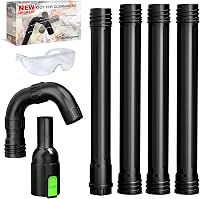
Choose a model-specific kit when your blower is supported, or an adapter kit only after checking its limits. These 4 options serve different blower owners and handling needs.
EGO Gutter Attachment: for supported EGO owners
The EGO attachment suits owners who want an EGO accessory with screw connection tubes and an adjustable nozzle. Its 3 lb attachment weight also belongs in your handling decision, since you'll support it along with the blower.
Supported models include LB5300/LB5302, LB5750, LB5800, LB6150/LB6151, LB6500/LB6504, LB6700/LB6703, LB7650/LB7654, and LB8800/LB8803-2.
Choose it if your model matches and you can comfortably support the assembled tool. Skip it if your blower isn't supported or the combined weight makes steady aiming difficult.
Sealegend Gutter Kit for EGO: for changing nozzle angles
The Sealegend kit suits compatible EGO owners who want more ways to adjust the tube's orientation. Its tail wand rotates through 360 degrees, while the tip has a separate adjustable nozzle with a gear-locking mechanism.
It supports the same EGO models named above and specifically excludes the LB4800. Screw-threaded joints secure the extension sections, and Sealegend says its reinforced tubes help reduce shaking.
Choose it when steering angle is your main concern. Skip it for an unsupported blower, and switch off before adjusting joints or nozzle settings unless the instructions expressly allow otherwise.
Greenworks Gutter Kit: for buyers needing adjustable length
The Greenworks kit suits buyers who need removable tube sections to match the job. Its universal adapter broadens the possible blower choices, but it doesn't remove the need for an exact compatibility check.
Greenworks specifies 60V and 80V blower/vacuums with more than 450 CFM and connections up to 5 inches in diameter. Its compatibility information also mentions 40V models, so confirm support for your exact blower before choosing it.
Skip this kit if you cannot confirm both the connection and blower requirements. Don't choose it solely because the adapter is described as universal.
Black+Decker Gutter Attachment: for quick-connect assembly
The Black+Decker kit suits owners of compatible blowers who prefer quick-connect sections and a flexible tube. BLACK+DECKER describes it as fitting most current BLACK+DECKER leaf blower models, which still calls for a model check.
Its up-to-12-ft reach assumes a 5 ft 11 in person holding the pole straight at chest level. That figure is working reach, not the length of the attachment itself.
Choose it if the connection matches and its assembly style suits you. Skip it if your gutter height only works on paper by stretching your arms or holding an awkward stance.
How should you set up and use the attachment?
Assemble it on the ground with power disconnected, following both manuals. Check that each joint is secure and the nozzle points in the intended direction before raising the tube.
Use the shortest approved tube arrangement that reaches the gutter. Practice positioning it with the blower off so you can check clearance without fighting airflow.
Wear eye protection and follow the blower's hearing protection guidance. Stay clear of overhead wires, keep stable footing, and avoid standing directly beneath the discharge.
Begin with a controllable airflow setting allowed by the instructions, then increase only as needed. Work in short sections and move your feet along the gutter instead of leaning or twisting to extend your reach.
Aim to eject debris from the gutter rather than bunching it at an outlet. Pause often to see where material lands and whether the nozzle is still aimed into the trough.
For the full sequence, follow how to clean gutters with a leaf blower. If blower handling is new to you, start with how to use a leaf blower the right way.
What mistakes reduce results or damage control?
The main mistakes are using too much tube, forcing a loose connection, and blowing at debris that needs removal by another method. Fix the cause before adding more power.
Don't hold a slipping adapter together while the blower runs. Lower the attachment, disconnect power, and check the fit and locking parts.
Don't keep working when the tube shakes enough to spoil your aim. Shorten it where permitted, check the joints, and stop if you still can't control it.
Avoid climbing with the assembled attachment to gain extra reach. If ground access doesn't work, arrange a suitable alternative, such as professional gutter cleaning.
After use, disconnect power and remove trapped leaves or dirt from the nozzle and joints. Follow the cleaning instructions, let damp parts dry, and store the sections where they won't be crushed or bent.
Should you buy a leaf blower gutter attachment?
Buy one for routine clearing when fit, access, and dry debris line up. Skip it for packed sludge, blocked downspouts, covered gutters that prevent access, or rooflines beyond your controlled reach.
Pick EGO for its supported models and screw-tube setup, or Sealegend when its extra angle adjustments suit you. Consider Greenworks for adjustable length after confirming compatibility, or Black+Decker for a compatible quick-connect setup.
Do leaf blower gutter attachments work for your home? The deciding question is whether you can aim air into loose debris from stable ground; use our gutter attachment comparison to narrow the compatible choices.
Frequently asked questions
Do leaf blower gutter attachments actually work?
Yes, leaf blower gutter attachments work best on loose, dry leaves in open gutters that you can reach from the ground. A secure connection and a well-aimed nozzle help direct air where it is needed.
Packed sludge, blocked downspouts, and covered gutters often call for a different cleaning method.
Can a leaf blower gutter attachment remove wet leaves?
It may shift scattered damp leaves, but wet mats and muddy buildup are poor targets for air alone. Let light debris dry when conditions allow, or choose a method that lifts out the buildup.
Don't keep blowing at a stubborn clog if debris is only moving toward the downspout.
Are gutter attachments safer than using a ladder?
Working from the ground avoids climbing for the blowing step, but the attachment still needs careful handling. Falling debris, overhead wires, and an awkward tube can create hazards.
Wear eye protection, follow hearing protection guidance, and stop if you need to lean or lose control of the nozzle.
How do I know if a gutter attachment fits my blower?
Match your exact blower model to the attachment's compatibility information, then check any airflow and connection limits. A shared brand or a universal adapter does not prove compatibility.
Follow both tools' instructions and make sure the assembled connection locks securely before you raise the tube toward the gutter.