How to Choose a Leaf Blower Vacuum Mulcher
Choose a leaf blower vacuum mulcher by matching its power source, collection setup and mode changes to your yard. Choose corded power for longer jobs within outlet reach, or cordless power for scattered cleanup areas.
On this page (9 sections)
- What should you check before choosing a leaf blower vacuum mulcher?
- Should you choose a corded or cordless model?
- How much airflow matters for blowing and vacuuming?
- What collection bag and mulch ratio make sense?
- Which models fit different cleanup routines?
- How should you set up a blower vacuum mulcher?
- How do you collect leaves without repeated clogs?
- Which mistakes make leaf collection harder?
- Which leaf blower vacuum mulcher should you choose?
Choose a leaf blower vacuum mulcher by matching its power source, collection bag and mode changes to your cleanup route. Corded models suit longer work near an outlet, while cordless models suit areas where routing an extension cord would slow you down.
A 3-in-1 tool makes the most sense when you need to gather leaves, collect them and reduce their bulk. If you mostly clear a driveway or move leaves to a wooded edge, you may get little use from the vacuum attachment.
For a wider look at blower types, start with our cordless leaf blower buying guide. If you're deciding which jobs need suction, see leaf blower vs leaf vacuum.
What should you check before choosing a leaf blower vacuum mulcher?
Check your work area and disposal route first. A tool that reaches every leaf pile still needs a collection setup you can carry and empty comfortably.
Walk the route before buying, including gates, narrow paths, steps and the trip to your compost pile or yard-waste container. For corded tools, consider a safe cable route rather than measuring only the straight-line distance from the outlet.
Next, look at the leaves you usually collect. Loose leaves on a patio are a different job from layers caught in grass or scattered through gravel.
Use these questions to narrow your choice:
- Where do leaves gather? A few corners favor targeted vacuuming; broad coverage calls for gathering first.
- How often do you collect them? Frequent light cleanup avoids the heavy piles that build up between sessions.
- Where will you empty the bag? Long walks to disposal make carrying comfort more important.
- Can you wear a loaded bag? Backpack collection is useful only if putting it on and removing it works for you.
- How much debris isn't leaves? Stones, sticks and litter need sorting rather than feeding into the mulcher.
A blower vacuum is a collection tool, not a way to process everything on the ground. If a cleanup area contains lots of hard debris, plan to clear that first or use another collection method there.
Should you choose a corded or cordless model?
Choose corded power for longer sessions within safe outlet reach and cordless power for work spread around obstacles or separate yard areas. Map the route before deciding how much freedom you need.
Corded power removes battery recharge stops, but it adds cable management. A route that crosses steps, paths or several corners can make a short job awkward.
Use an outdoor-rated extension cord that meets the tool manual's gauge and length requirements. Longer reach can require a heavier cord, so don't buy a cable based on length alone.
A cordless tool lets you move between beds, gates and distant corners without dragging a cable. You still need enough battery time for the job, plus a place to charge and store the battery as directed.
Our guide to leaf blower battery life explains what affects working time. Don't assume blowing and vacuuming will use a battery at the same rate.
| Power source | Choose it for | Plan around |
|---|---|---|
| Corded electric | Longer cleanup near an outdoor outlet | Cord requirements, routing and reach |
| Battery powered | Scattered areas or routes around obstacles | Working time, charging and battery care |
If outlet access fits your yard but you're unsure you need collection modes, compare the best electric leaf blowers before buying a more involved setup.
How much airflow matters for blowing and vacuuming?
Use CFM and MPH to compare blower output, then judge vacuuming by its collection setup and intended debris. A maximum blower figure isn't a suction measurement.
CFM describes air volume, while MPH describes air speed. Our CFM vs MPH guide explains how these measures relate to moving leaves.
For a blower-vacuum, low-speed control deserves attention alongside maximum output. It helps you gather leaves near beds without scattering them across the area you just cleared.
Think about how you'll form the pile, too. Moving leaves into a loose row makes it easier to vacuum steadily than building a tall, tightly packed mound.
Don't choose between tools using a small difference in maximum airflow alone. A bag you can empty easily or a mode change that fits your routine can save more effort across the whole job.
What collection bag and mulch ratio make sense?
Choose a bag you can carry, remove and empty comfortably, then use the mulch ratio as a rough guide to reduced volume. Capacity helps only while the collected load remains manageable.
A large bag can reduce stops, but you don't need to fill it completely. Damp material can make a partly filled bag heavy enough to justify emptying early.
Backpack collection moves the collected load onto your back. Check whether you can reach the straps, take the bag off safely and empty it without an awkward lift.
Bag shape and opening matter at disposal time. Consider whether the opening will fit over your yard-waste container or whether you'll need to empty onto a tarp first.
A stated 18:1 mulch ratio means reducing 18 volumes of leaves to 1 under the measurement conditions. Leaf type, moisture and how tightly the starting pile is packed affect the result you get.
Shredding reduces bulk; it doesn't turn leaves into finished compost. Mix collected leaves into your compost routine rather than leaving a dense, wet mass in the collection bag.
Which models fit different cleanup routines?
Choose WORX for frequent mode changes, Black+Decker for flexible backpack collection, Greenworks for cordless movement, or Craftsman for a larger stated bag capacity. Each solves a different part of the collection job.
The best leaf blower vacuums roundup gives you a broader comparison. These four examples show which features deserve priority for different yards and buyers.
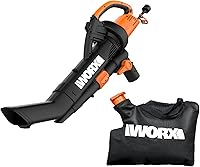
WORX Trivac WG509: leaf blower vacuum mulcher for frequent switching
Choose the WORX Trivac WG509 if you regularly alternate between gathering leaves and collecting small piles. Its lever-operated conversion suits a route where blowing and vacuuming happen in short bursts.
The corded 12 Amp tool has variable-speed control and blower output up to 350 CFM and 210 MPH. Lower output is useful when gathering leaves along lawn edges before switching to collection.
Its metal impeller shreds leaves during vacuuming. You still need to remove stones and other unsuitable debris before collection, especially where a patio meets gravel.
The WG509 fits a homeowner who works around nearby patios, walkways and lawn edges, with an outlet route that stays manageable. The mode lever is most useful when your cleanup pattern involves repeated changes rather than one long pass in each mode.
Skip it if cord routing is your main problem or a backpack bag is a firm requirement. At 9.3 pounds before collected leaves, it's also worth considering how long you want to hold the tool during each pass.
Black+Decker 3-in-1 Blower-Vac: flexible backpack collection
Choose the Black+Decker BEBL7000 if you want a wearable collection bag and flexible vacuum tube. This setup suits buyers who want to direct the pickup tube while carrying the collected leaves on their back.
The corded tool converts between blowing, vacuuming and mulching. Its blower output reaches up to 400 CFM and 250 MPH, with extra power available through the POWERBOOST button.
The zipper-free bag has a wide opening for emptying. That makes it a useful option for someone who wants to avoid working a bag zipper during repeated disposal stops.
The flexi-tube matters most when you're collecting around corners or changing the pickup angle often. It gives this model a clear role for more detailed collection work around hard surfaces.
Skip it if wearing and removing a loaded backpack would make cleanup harder for you. It also keeps the extension-cord demands of a corded tool, so the bag design won't solve poor outlet access.
Greenworks 40V Blower-Vac: cordless movement between areas
Choose the Greenworks 40V Blower-Vac if moving without an extension cord matters more than working continuously from an outlet. It suits separate cleanup spots divided by gates, beds or other obstacles.
The package includes a 5.0 Ah battery and charger. A brushless motor, variable-speed dial and turbo mode provide different blower settings for gathering leaves before collection.
This is the option to consider when cable routing would otherwise dictate your work pattern. It can also fit someone building a Greenworks 40V tool collection, provided the batteries match the requirements of each tool.
Greenworks gives conflicting airflow, speed, weight and noise figures for this model, so those numbers aren't a sound basis for choosing it over the corded options. Confirm the included vacuum attachments and collection bag before ordering.
Skip it if you need predictable, uninterrupted collection from one charge. No single working-time figure here establishes how long your vacuuming session will last, and choosing cordless means allowing for recharge stops.
Craftsman 3-in-1 Blower-Vac: larger backpack collection loads
Choose the Craftsman CMEBL7000 if you want a 55 L backpack collection bag for a larger leaf-gathering job near an outlet. Its stated capacity gives you room to collect more before emptying, provided the load stays comfortable.
The corded 12 Amp tool delivers blower output up to 450 CFM and 260 MPH. Tool-free conversion lets you change between blowing, vacuuming and mulching without needing separate hand tools.
Its wide-mouth bag opening is useful when transferring shredded leaves into a container or compost area. Plan the emptying spot so you can remove and handle the bag without carrying it farther than needed.
This model fits buyers who prefer a larger collection bag and can manage a backpack setup. The extra space is most useful for dry leaves, where bulk may become a problem before weight does.
Skip it if you prefer frequent, light loads or have difficulty putting on a backpack. A bigger bag won't shorten the job if you need help removing it each time.
How should you set up a blower vacuum mulcher?
Set up the correct tubes, guards and collection bag before connecting power. Follow the manual's assembly order, including any latches that must close before the tool will run.
Start with a clear work area and an empty bag. Inspect the collection path for leftover material, and check that the bag closure is secure.
For corded models, inspect the cable and route it away from the pickup area and walking paths. Use the cord-retention feature if provided, and follow the manual's outlet and electrical-protection requirements.
For battery models, check that the battery is charged and seated correctly after assembly. Keep a charging break in your plan rather than waiting until a half-finished pile blocks a path.
Wear eye and hearing protection, sturdy shoes and clothing that won't hang near an intake. Keep people and pets away from the area where debris could be blown.
Practice the mode change with the tool off before starting the main job. Knowing where the bag, tubes and latches connect makes the first conversion much easier.
How do you collect leaves without repeated clogs?
Collect loose leaves in shallow passes, keeping the intake above the ground rather than pressing it into a pile. Let material feed steadily instead of trying to swallow a dense mound.
Blow scattered leaves into a row or several small piles first. Work with the wind when practical, and avoid blowing leaves back across the area you've cleared.
Remove sticks, stones, litter and other unsuitable material before vacuuming. Around gravel, use a rake or hand collection where you can't keep loose stones out of the intake.
If pickup slows, stop and check whether the bag needs emptying. Also inspect for a kinked hose or blocked collection path using the manual's procedure.
Disconnect the cord or remove the battery before clearing a blockage. Keep your hands away from moving parts and wait for everything to stop.
For damp piles, check whether a leaf blower can handle wet leaves before continuing. The safe choice may be to loosen the pile manually or let it dry.
Our guide to using a leaf blower covers gathering patterns that help keep the collection stage organized.
Which mistakes make leaf collection harder?
Avoid overfilled bags, oversized piles and unnecessary mode changes. These create extra handling even when the tool has enough power for the leaves.
Don't carry every bag load across the entire yard if you can place a suitable disposal container closer to the work. A shorter emptying route can matter more than a larger bag.
Don't assume tool-free conversion means no parts need moving. Some setups still involve changing tubes or attaching collection components, so group similar tasks where that reduces repeated assembly.
Don't run maximum airflow beside loose mulch or delicate plants just because it's available. Start with controlled output and increase it only when the leaves need it.
Don't leave shredded leaves in the bag between jobs. Empty it after use, clean it as directed and let it dry before storage.
Check tubes, bag fabric, closures and accessible intake areas before the next session. Replace damaged parts according to the manual, and never bypass guards or safety latches to keep working.
Which leaf blower vacuum mulcher should you choose?
Choose your leaf blower vacuum mulcher around the part of cleanup that takes the most effort. Solve reach, carrying or conversion first, then compare output between the remaining options.
- Choose WORX if you work near an outlet and switch often between gathering and vacuuming.
- Choose Black+Decker if flexible tube handling and a zipper-free backpack bag fit your collection routine.
- Choose Greenworks if reaching separate areas without a cord is the main reason to buy.
- Choose Craftsman if you want a larger backpack bag and can comfortably manage the collected load.
Choose a regular blower if you rarely bag leaves. For a broad lawn with deep seasonal cover, compare a blower-vacuum's repeated pickup and emptying steps with raking, mowing or other collection methods before committing.
Once you've decided whether collection modes are worth having, use our leaf blower size guide to match the rest of your cleanup needs to your yard.
Frequently asked questions
What should I look for in a leaf blower vacuum mulcher?
Choose around outlet access, collection comfort and mode changes before comparing maximum airflow. Check the route from your cleanup area to your disposal spot, since you'll carry collected leaves along it.
Then compare bag openings, speed controls and the attachments needed to switch between blowing and vacuuming.
Is a corded or cordless leaf blower vacuum mulcher better?
A corded model suits longer jobs within safe extension-cord reach, while a cordless model suits scattered work areas and routes around obstacles. Battery capacity alone won't tell you the working time for your cleanup.
Choose based on where you collect leaves and whether you can pause to recharge.
Does a higher mulch ratio mean a better leaf mulcher?
A higher mulch ratio doesn't automatically mean a better tool for your yard. It describes leaf-volume reduction, while collection speed, carrying comfort and emptying still affect the job.
Dry, loose leaves and damp, packed leaves behave differently, so don't plan your disposal needs around the advertised ratio alone.
Can a leaf blower vacuum mulcher handle wet leaves?
Vacuum wet leaves only if the tool's instructions allow it. Wet leaves weigh more, can stick inside the collection path and may fill the bag with a heavy load before it looks full.
Our wet-leaf guide explains how to approach damp piles and when to wait.
Should I buy a blower vacuum mulcher or separate tools?
Choose a 3-in-1 tool when you regularly collect leaves after blowing them together and want shredded material for disposal or composting. A dedicated blower makes more sense when you mostly clear paths or move leaves elsewhere.
For broad lawns with deep leaf cover, also compare the time needed for other collection methods.