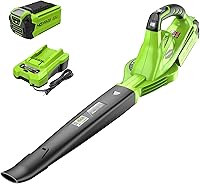
EGO LB5302 vs LB6151: Which EGO Blower to Buy? (October 2026)
In the EGO LB5302 vs LB6151 comparison, choose the LB6151 for heavier leaf cleanup or the LB5302 for routine sweeping with less weight. Both kits include a battery and charger.
On this page (10 sections)
- EGO LB5302 vs LB6151: which has more power?
- Which EGO blower is easier to carry and live with?
- What comes with each kit, and what should you check first?
- How should you plan battery runtime and charging?
- Who should buy the LB6151, and who should skip it?
- Who should buy the LB5302, and who should skip it?
- How do you clear leaves without wasting battery?
- Which mistakes should you avoid with either blower?
- What care does either EGO blower need?
- EGO LB5302 vs LB6151: make the choice around your hardest regular job
In the EGO LB5302 vs LB6151 comparison, buy the LB6151 for heavier leaf cleanup and the LB5302 for routine sweeping with less weight to carry. Both include a battery and charger, so your main choice is extra output versus easier handling.
Start with the job you do most often. Clearing scattered leaves from a driveway calls for a different buying decision than moving repeated layers of leaves across grass.
The stronger model makes sense when demanding cleanup is a regular chore. For short patio and walkway sessions, the lighter model is the more sensible fit.


EGO LB5302 vs LB6151: which has more power?
The LB6151 has more maximum airflow and air speed, making it the better choice for heavier leaf loads. It reaches 615 CFM and up to 170 MPH, compared with 530 CFM and up to 110 MPH for the LB5302.
CFM measures the volume of air moved, while MPH describes air speed. For yard cleanup, think about both moving a broad layer of loose leaves and breaking apart small, stubborn patches.
The LB6151 is the stronger fit when leaves collect along fence lines, gather under trees or need to travel across a lawn. Its extra output gives you more room to increase force when a pile stops moving.
The LB5302 suits loose leaves and grass clippings on open, hard surfaces. Buying more output adds less value when most of your work is a quick sweep after mowing.
EGO describes Turbo mode on both blowers for wet leaves and caked-on grass. Use that setting for difficult patches rather than making it your default for the whole yard.
Our guide to CFM vs MPH on a leaf blower explains which number matters for different types of debris.
EGO LB5302 vs LB6151: which has more airflow control?
The LB6151 offers a wider adjustable airflow range, including a lower starting point. Its variable speed dial covers 200 to 480 CFM, while the LB5302 covers 250 to 400 CFM.
Those ranges apply to regular variable operation, separate from each blower's higher Turbo maximum. Both have a lock-on button to hold your chosen setting.
A lower setting helps when working near mulch, gravel borders or a pile you don't want to scatter. Start gently, then increase airflow only until the leaves move in the direction you want.
Lock-on is useful for a long, steady pass along a driveway. Return to active trigger control when you approach corners, parked vehicles or planting beds and need to change output often.
Which EGO blower is easier to carry and live with?
The LB5302 is the better choice when carrying weight comes first. It weighs 7 lb, compared with 7.5 lb for the LB6151.
Half a pound matters more during a long session than during a quick sweep of the front steps. If your arm tires before your battery runs out, handling deserves more weight in your decision than maximum output.
Both are handheld blowers, so keep your elbow near your body and move your feet instead of reaching far ahead. A relaxed stance also makes it easier to keep the nozzle pointed consistently.
The LB5302 has a published noise figure of 65 dB, compared with 71 dB for the LB6151. Use that as another reason to favor it for noise-conscious cleanup, without assuming either blower is quiet enough to use without hearing protection.
Wear hearing and eye protection, keep people and pets clear, and choose a reasonable time to work. Hard walls and narrow side yards can make blower sound more intrusive to nearby homes.
Read whether battery leaf blowers are quieter than gas for more help weighing sound alongside convenience.
What comes with each kit, and what should you check first?
Both kits include a 56V 2.5Ah battery and a standard charger, so either can serve as your first EGO blower. Both blowers accept EGO 56V ARC Lithium batteries, and the included battery works with compatible EGO power tools.
The LB6151 includes a tapered nozzle. The LB5302 includes flat and tapered nozzle attachments, giving you a choice of shapes for different passes.
A tapered nozzle helps direct air toward a specific patch or edge. A flat nozzle spreads the stream into a wider shape, which can suit sweeping loose debris across a hard surface.
Before assembly, remove the battery and follow the manual to secure the tube and chosen attachment. Check that each connection is seated before inserting the battery.
Clear stones, wire, litter and other loose objects from your route before starting. A blower can send small objects toward windows, cars or bystanders, even when your aim is simply to move leaves.
Try the controls in an open area with the nozzle facing clear ground. Learn how to release lock-on and stop airflow before working close to beds or other obstacles.
How should you plan battery runtime and charging?
Plan around airflow demand and charging breaks, rather than the longest advertised runtime. EGO claims up to 75 minutes from the included battery for each model and a 50-minute charge with the included CH2100 charger.
That runtime is a maximum claim, not a promise of continuous Turbo operation. Higher output draws more energy, so a demanding leaf session needs a different plan from light sweeping.
Break a large cleanup into zones and finish one before moving on. Wandering between scattered patches wastes working time and can leave you with several unfinished piles when the battery needs charging.
Use a charging break for bagging, raking or moving collected leaves. If you already have another compatible EGO battery, plan the work around which tools need it that day.
Charge in the location and conditions EGO specifies, and allow a hot battery to cool as directed. Keep the charger dry and its ventilation clear.
Our guide to how long leaf blower batteries last covers runtime planning in more detail. For a broader look at batteries and tool choices, use the cordless leaf blower buying guide.
Who should buy the LB6151, and who should skip it?
Buy the LB6151 when leaf collection is a regular, demanding job, especially when you need to move leaves across grass or shift gathered piles. Its wider control range also suits a yard with both open areas and edges that need gentler airflow.
It fits the homeowner who clears several leaf-covered zones and wants more output available for the hardest part. Choose it because those harder jobs happen often, rather than because the larger number looks more appealing.
Skip it if your work is mostly a short sweep of a porch, patio or driveway. In that situation, the LB5302's easier carrying is likely to matter more often.
Also skip it if even a modest increase in handheld weight would shorten your sessions. More output has little value if you stop early because carrying the blower becomes tiring.
The LB6151 earns its place for buyers who will use its broader output range. It isn't an automatic upgrade for every small yard.
Who should buy the LB5302, and who should skip it?
Buy the LB5302 for frequent, lighter cleanup, especially when you value lower weight and a lower published noise figure. It suits someone who clears leaves before they build into thick layers.
A driveway, walkway and small patio make a strong use case. Regular upkeep keeps each job manageable and reduces the need to push a large pile in one pass.
The included nozzle choices are useful if your route mixes broad paving with narrow edges. Choose the attachment before starting each area, with the battery removed.
Skip the LB5302 if your usual cleanup involves neglected leaf cover, repeated damp piles or long pushes across grass. The LB6151 is the better fit when those conditions define the job.
Skip both if your main need is collecting leaves into bags or shredding them. These are blowers, so plan a separate way to gather and remove the pile.
How do you clear leaves without wasting battery?
Work toward one collection point and move thin layers, using the lowest airflow that keeps leaves moving. Good direction and small sections matter more than keeping Turbo pressed throughout the session.
Pick a destination before you begin, such as a tarp or an area where you can rake leaves into bags. Keep the pile away from drains, roads and neighboring property.
Start at the far edge and work inward with the breeze where possible. Blowing against steady wind makes you move the same leaves repeatedly.
Hold the nozzle low enough to guide leaves along the surface without scraping it. Sweep in controlled arcs, then step forward once the strip ahead is clear.
On grass, divide a deep layer into smaller strips instead of trying to roll the entire mass at once. If the pile becomes too large to move neatly, collect it before continuing.
Use short bursts of Turbo for a stubborn edge, then reduce output once it breaks free. Our guide to how to use a leaf blower walks through a full cleanup route.
What changes when leaves are wet?
Choose the LB6151 for regular wet-leaf work, but change your approach as well as your setting. Wet leaves cling together, so attack a pile from its edge and move small portions.
Loosen flattened mats with a rake before blowing. Holding maximum airflow over one packed patch can consume battery without making useful progress.
If the job can wait, let leaves dry before tackling the largest areas. For damp conditions that need attention now, read how to use a leaf blower on wet leaves.
Which mistakes should you avoid with either blower?
Avoid using excess airflow, moving oversized piles and ignoring where debris will land. These habits make cleanup harder even with the stronger model.
- Starting on Turbo: Begin low so you don't scatter leaves into beds or across a clean section.
- Blowing straight into a corner: Work outward from trapped edges before directing leaves toward your collection point.
- Chasing every last leaf: Gather the main pile first, then make a light finishing pass.
- Trying to move stones: Pick them up instead of using the blower near glass, cars or people.
- Working through fatigue: Take a break when your grip or aim becomes less steady.
Dry, dusty areas need extra care because airflow can send fine material into the air. Avoid blowing fine dust, ash or unknown material, and follow the manual's use limits.
What care does either EGO blower need?
Keep the air openings clear, the connections secure and the battery stored as EGO directs. Routine inspection helps prevent avoidable problems during the next cleanup.
Remove the battery before cleaning, inspecting the nozzle or clearing an obstruction. Brush away loose debris and use the cleaning method in the manual rather than spraying water into the tool.
Check the tube and nozzle for cracks or loose connections after an impact. Stop if you notice damage, unusual vibration or a change in operation, and follow EGO's service guidance.
Store the blower dry and where the tube won't be bent or crushed. Keep the battery away from metal objects that could bridge its contacts.
EGO backs both models with a 5-year tool warranty and a 3-year battery warranty. Follow the applicable warranty terms and keep your proof of purchase.
EGO LB5302 vs LB6151: make the choice around your hardest regular job
Choose the LB6151 if demanding leaf cleanup is part of your normal routine; choose the LB5302 if routine sweeping and easier carrying matter most. For this EGO LB5302 vs LB6151 decision, judge the job you do regularly rather than a rare cleanup you might face.
Before ordering, picture your route, collection point and likely charging break. Our guide to what size leaf blower you need for your yard can help you check that plan against your property.
If you're also choosing a battery platform, read EGO vs Greenworks leaf blowers. For more detail on the stronger of these 2 models, see our EGO LB6151 review.
Ready to choose the LB6151 for recurring leaf work? Use the full LB6151 review to check its controls and kit details before buying.
Frequently asked questions
What is the main difference between the EGO LB5302 and LB6151?
The LB6151 offers more maximum airflow and air speed, while the LB5302 has lower weight and noise figures. Choose the former for heavier leaf cleanup and the latter for routine sweeping where carrying comfort matters more.
Both kits include a battery and charger, so neither needs those bought separately.
Which EGO blower is better for wet leaves?
The LB6151 is the better choice for wet leaves because it has higher maximum airflow and air speed. EGO describes Turbo mode on both models for wet leaves and caked-on grass.
Work in thin layers, and loosen stuck mats with a rake rather than holding Turbo over one spot.
Do the EGO LB5302 and LB6151 include a battery and charger?
Yes, both kits include an EGO 56V 2.5Ah battery and standard charger. They also include nozzle attachments, so you have the basic parts needed to start clearing.
Charge the battery and follow the assembly instructions before use, then choose your starting airflow with the blower pointed toward a clear area.
Is the EGO LB6151 much heavier than the LB5302?
The LB6151 weighs 7.5 lb, compared with 7 lb for the LB5302, a half-pound difference. That matters most when you carry the blower for long stretches or tire easily.
Consider how long each cleanup lasts and how much of it involves walking rather than moving leaves.
Can I use either EGO blower with another EGO battery?
Yes, both blowers work with EGO 56V ARC Lithium batteries. A compatible battery you already have can help you plan around charging breaks, though both kits include their own battery.
Check its condition and charge before starting, and follow EGO's instructions for battery use, charging and storage.