DeWalt DCE100B Blower Review: Worth It? (October 2026)
This DeWalt DCE100B review recommends it for tight work areas and small cleanup jobs, especially if you already have a compatible battery. Choose a kit for a complete starter setup, or more airflow for large leaf piles.
On this page (9 sections)
- DeWalt DCE100B review: Who should buy it?
- What do the DCE100B's specs mean in use?
- Is the DCE100B powerful enough for leaves?
- How do the DeWalt, Black+Decker and Greenworks compare?
- What should you check before buying the bare tool?
- How should you set up and use the DCE100B?
- Which mistakes make compact blowers less useful?
- How should you care for the blower and battery?
- What is the final decision in this DeWalt DCE100B review?
The DeWalt DCE100B is worth choosing for small, focused cleanup jobs, especially if you already use compatible DeWalt batteries. This DeWalt DCE100B review recommends it for work areas and tight spaces, with clear limits for seasonal leaf clearing.
Its main strength is control: you can direct air into a small area without committing to a larger yard blower. Its main buying catch is the bare-tool package, so include a battery and charger in your plans if you need them.
DeWalt DCE100B review: Who should buy it?
Buy the DCE100B for short cleanup sessions in restricted spaces, where a compact body and adjustable output are useful. Skip it as your main blower if your regular job is moving deep leaf cover across a lawn.
DeWalt 20V Compact Blower

- 100 CFM airflow
- 3-speed variable switch
- Variable speed trigger
- 3 nozzle attachments
- Bare tool
Choose this compact blower for focused work-area cleanup, especially if you already have a compatible DeWalt battery. Its nozzle choices and adjustable controls suit tasks where directing the air matters more than covering a lawn.
Pros
- Three nozzle attachments included
- Speed switch and variable trigger
- Trigger lock for sustained blowing
- Compact body for restricted spaces
Cons
- Limited airflow for broad leaf cleanup
- Battery and charger sold separately
DeWalt names work-area clearing, ground and overhead debris, and cleaning joints among its uses. Those tasks favor a tool you can aim carefully, rather than one chosen mainly to push a wide front of leaves.
The speed switch sets your general output, while the variable trigger lets you adjust it during a pass. DeWalt says the trigger lock-on reduces fatigue by removing the need to keep squeezing the trigger.
Is the DCE100B the right blower for your work area?
It makes sense when access and control matter more than coverage. Think about clearing loose debris from a small hard surface, directing material out of a corner, or tidying an outdoor work area before packing up.
Choose a broom or vacuum when collecting debris is more useful than moving it elsewhere. A blower needs a clear destination for the material, and blowing dust around an enclosed room can create more cleanup.
For a buyer with suitable batteries already on hand, this can fill a different role from a full-size yard blower. It handles the quick, local jobs for which bringing out a larger tool feels unnecessary.
What do the DCE100B's specs mean in use?
The DCE100B's 100 CFM airflow favors focused clearing, while its compact body helps with access. Maximum air speed matters, but air volume is the more useful starting point when comparing blowers for broad leaf coverage.
| Detail | DeWalt DCE100B |
|---|---|
| Airflow | 100 CFM |
| Maximum air speed | 135 MPH |
| Tool weight | 2.5 lb |
| Speed control | 3-speed switch and variable trigger |
| Trigger lock | Yes |
| Nozzles | 3 included |
| Battery system | DeWalt 20V MAX |
| Package | Bare tool with nozzle attachments |
CFM describes how much air moves, while MPH describes how fast it moves. A narrow stream can target a small patch, but clearing a broad layer of leaves calls for enough air volume to keep material moving.
Our CFM vs MPH leaf blower guide explains how to weigh those figures together. Don't choose between these tools based on voltage alone, either: battery voltage isn't a direct measure of clearing ability.
The weight figure also needs context because you'll operate the blower with a battery attached. Consider the complete tool in your hand, including how easily you can hold the nozzle near the ground without bending or reaching.
Is the DCE100B powerful enough for leaves?
Choose it for scattered, dry leaves on small hard surfaces, rather than dense piles or a lawn covered in leaves. Leaves slide more easily across pavement than through grass, where blades and uneven ground hold them in place.
Your usual cleanup matters more than the size of your property alone. A small yard with deep seasonal leaf cover can demand more blower capacity than a larger property with only a short walkway to sweep.
Wet, matted leaves are another reason to choose a different approach. Break up dense material with a rake, or wait for drier conditions instead of holding a compact blower over the same patch.
Our guide to using a leaf blower on wet leaves covers that decision. If lawn cleanup is the main reason you're shopping, use our yard size guide to narrow the tool class first.
None of these 3 models should be chosen simply because it has the highest number in this comparison. They are compact blowers and sweepers, so a demanding fall cleanup may call for a different class of tool.
How do the DeWalt, Black+Decker and Greenworks compare?
Choose DeWalt for compact work-area control, Black+Decker for a basic hard-surface starter kit, and Greenworks for a kit with more airflow. Both alternatives include the battery and charger that the DCE100B requires separately.
| Blower | Airflow | Maximum air speed | Weight | Battery and charger |
|---|---|---|---|---|
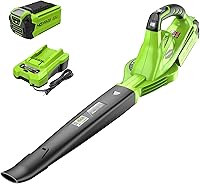
| DeWalt 20V Compact Blower | 100 CFM | 135 MPH | 2.5 lb | Not included |
| Black+Decker 20V Blower | 100 CFM | 130 MPH | 3.7 lb | Included |
| Greenworks 40V Blower | 130–135 CFM | 150 MPH | 3.3 lb | Included |
Greenworks publishes conflicting airflow figures of 130 and 135 CFM. Either figure puts it above the other 2 here; confirm the exact airflow before ordering only if that small difference determines your choice.
Choose Black+Decker for a simple sweeping kit
The Black+Decker suits someone who wants to start clearing a deck, sidewalk or driveway without buying separate battery equipment. Its package includes a 1.5 Ah battery and charger.
Skip it if you're replacing the DeWalt specifically to gain more air volume. The airflow figure is the same, so the stronger reason to choose Black+Decker is its complete package and hard-surface focus.
It also makes sense to stay with DeWalt if your priority is a compact tool for awkward work areas. Buying another battery system should solve a clear need, rather than simply duplicate the equipment you already have.
Choose Greenworks for regular hard-surface cleanup
The Greenworks is the stronger match here for a buyer starting from scratch who expects regular patio and driveway work. Its variable speed dial lets you reduce output for lighter debris, and the kit includes a 2.0 Ah battery and charger.
Skip it if your main goal is the smallest tool for tight work areas and you already have suitable DeWalt batteries. Also look beyond this group if you need to shift large piles across grass.
For a wider set of choices, start with our cordless leaf blower buying guide. Match the tool to the surface and debris before choosing a battery platform.
What should you check before buying the bare tool?
Check battery compatibility, charging access and your usual job length before choosing the DCE100B. The bare-tool format works best when you already have the equipment needed to put it into use.
Confirm the exact battery and charger compatibility rather than assuming that packs from different brands fit because their voltage labels look similar. Battery systems are separate buying commitments.
Also consider whether the battery you plan to use is normally occupied by another tool. Sharing one pack can suit occasional cleanup, but it may interrupt a job if that pack is depleted before you reach the clearing stage.
There isn't a supported runtime figure here for comparing these packages. Plan around the work you need to finish, and read our guide to how long leaf blower batteries last for the factors that affect time between charges.
How should you set up and use the DCE100B?
Start with a secure nozzle, a clear collection area and low output. Check the manual for assembly and battery instructions, and remove the battery before fitting attachments or inspecting an obstruction.
Before blowing, pick up larger objects and decide where the loose debris will go. A tarp or collection point keeps you from moving the same material across the surface several times.
Choose a nozzle that fits the space and secure it as directed. Keep the air intake clear of clothing, loose material and other objects while you work.
Use these steps for a controlled pass:
- Put on eye and hearing protection, and keep people and pets clear of the debris path.
- Start on a lower speed setting and increase output only when the material needs it.
- Aim along the surface at a shallow angle, rather than straight down into it.
- Sweep in short, overlapping passes toward your collection point.
- Work with the wind when possible, then gather the pile before it spreads again.
Use the variable trigger for brief changes as you move between open areas and corners. Save lock-on for steady passes where you can maintain a safe direction, and release it before moving between work spots.
For overhead work, stand clear of falling debris and keep your footing secure. Follow our leaf blower use guide for more on airflow direction and cleanup order.
Which mistakes make compact blowers less useful?
The biggest mistake is asking a compact blower to move material that needs loosening or collecting first. If repeated passes barely shift a patch, change the method instead of staying on maximum output.
Starting too close to loose material
A concentrated stream can scatter a neat pile or send debris back toward you. Begin farther away, then move closer only as needed to control the direction.
Around gravel, avoid aiming into the stones. Pick up larger material by hand and use gentler airflow for loose leaves on the surface.
Blowing fine dust through an enclosed space
A blower moves dust into the air instead of capturing it. Use suitable collection equipment for fine dust, and don't blow hazardous dust such as silica or unknown work debris.
Keep airflow away from people, open doors and nearby properties. For a garage floor, sweep or collect material that would otherwise become airborne.
Building one pile that's too large to move
Several small collection points can be easier to manage than one dense pile. Gather material as you go, especially when wind could undo your progress.
Using maximum output for every pass
More output isn't always better near corners, plants or a nearly finished pile. Reduce speed when debris starts circling back or spreading beyond the area you meant to clear.
How should you care for the blower and battery?
Keep the intake clear, the tool dry and the battery contacts clean. Remove the battery before inspection or cleaning, and follow the manual rather than washing the blower with a hose.
After use, brush loose debris from the exterior and inspect the nozzle for damage or a blockage. Check that attachments still fit securely before the next session.
Let a warm battery cool before charging, and use the compatible charger in a dry location. Follow the battery instructions for storage temperature and charge level during long breaks between uses.
Store the blower where its intake and nozzle won't fill with debris. If operation changes sharply, stop and inspect it rather than continuing to run through a suspected obstruction.
What is the final decision in this DeWalt DCE100B review?
Pick the DCE100B for controlled cleanup in tight work areas, especially when compatible batteries are already part of your setup. Choose Black+Decker for a basic hard-surface kit, or Greenworks when regular driveway cleanup makes extra airflow more useful.
WarmHunch's scores reflect those trade-offs: DeWalt earns 8.4 for its compact design and controls, Black+Decker earns 7.8 for its starter package, and Greenworks earns 8.6 for adjustable output, greater airflow and included charging equipment.
For deep leaf cover across grass, widen your search beyond these compact options. For a closer comparison with the kit most likely to suit regular hard-surface work, read our Greenworks 40V blower review.
Frequently asked questions
Is the DeWalt DCE100B a leaf blower?
Yes, but its compact design and 100 CFM airflow make it a better choice for small cleanup jobs than broad lawn clearing. Choose it for loose debris in work areas and restricted spaces.
If seasonal leaf piles are your main task, look for more airflow.
Does the DeWalt DCE100B come with a battery?
No. The DCE100B is a bare tool, with the blower and 3 nozzle attachments included but no battery or charger.
You'll need compatible DeWalt 20V MAX equipment. If you're starting without batteries, compare the complete setup with a blower kit that includes both.
How powerful is the DeWalt DCE100B?
The DCE100B delivers 100 CFM airflow and a maximum air speed of 135 MPH. That combination suits focused cleanup of loose debris, especially on hard surfaces.
For large leaf piles or leaves caught in grass, prioritize greater air volume rather than choosing by maximum air speed alone.
What comes with the DeWalt DCE100B?
The package contains the DCE100B blower and 3 nozzle attachments. A battery and charger are separate requirements, so check that you have compatible equipment before ordering.
The nozzle choices help you direct airflow for different tasks, while the speed controls let you adjust output during use.