5 Best Leaf Blowers for Drying Cars (October 2026)
The best leaf blowers for drying cars include the Greenworks 40V Blower for light cleanup, the EGO LB7654 for car-and-yard work, and the DeWalt 20V Compact Blower for DeWalt households.
On this page (9 sections)
- Which leaf blower is best for drying a car?
- Best leaf blowers for drying cars
- How should you choose a blower for car drying?
- When does a blower help most after washing?
- How do you set up a blower before drying a car?
- How do you dry a car with a leaf blower?
- What mistakes make car drying slower or riskier?
- How do you care for a blower used on cars?
- Which leaf blower should you choose for drying a car?
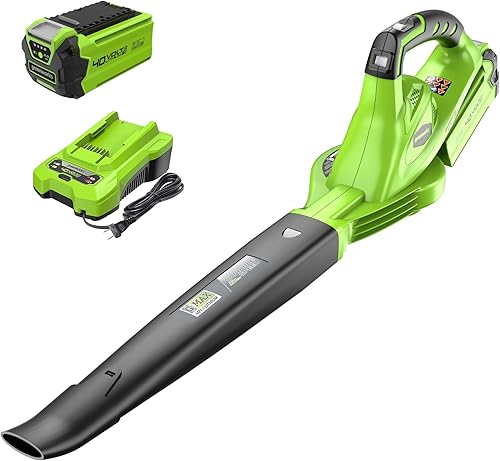
The Greenworks 40V Blower is our best leaf blower for drying a car when you want a light-duty kit that also handles patio cleanup. Choose an EGO for moving water across broad panels, or a compact blower for finishing mirrors and seams.
The right tool depends on how much drying you expect it to do. Clearing trapped drips after towel drying is a different job from moving rinse water off an SUV's roof and hood.
A blower also works best as part of a clean wash routine. It moves water without rubbing the finish, but careless use can stir grit onto wet paint or put a hard nozzle against a panel.
For a fuller explanation of the method, read our guide to drying a car with a leaf blower. If you're new to these tools, how to use a leaf blower the right way covers basic handling.
Our picks at a glance
-
1
-
2

-
3

Which leaf blower is best for drying a car?
Choose Greenworks for light drying, an EGO for broad surfaces, and DeWalt or Bullseye for smaller areas. A higher score doesn't make a light sweeper the right choice for every vehicle.
We compared airflow, controls, nozzle options, handling and battery setup for car-drying needs. These picks cover both full-size yard blowers and compact tools because they solve different parts of the job.
| Product | Best for | Airflow | Maximum air speed | Included power | Our score |
|---|---|---|---|---|---|
| Greenworks 40V Blower | light cleanup | 135 CFM advertised; 130 CFM in specifications | 150 MPH | 40V 2.0 Ah battery and charger | 8.6 |
| EGO LB7654 | car-and-yard work | Up to 765 CFM | Up to 200 MPH | 5.0 Ah battery and charger | 8.5 |
| DeWalt 20V Compact Blower | DeWalt households | 100 CFM | 135 MPH | Bare tool only | 8.4 |
| EGO LB5302 | routine wash days | Up to 530 CFM | Up to 110 MPH | 2.5 Ah battery and charger | 8.4 |
| Bullseye 20V Turbo Jet | finishing details | CFM figure unavailable | Two 20V 3000mAh battery packs and charger | 7.7 |
Best leaf blowers for drying cars
Start with the amount of water you want to remove and the space you have around the vehicle. The following picks stay in score order, with each suited to a different wash routine.
Greenworks 40V Blower
- Variable speed dial
- Up to 150 MPH
- Includes 2.0 Ah battery and charger
- Concentrator nozzle
A complete cordless kit for small drying jobs, patio sweeping and garage cleanup. Choose it for light work rather than clearing water from a large vehicle as quickly as possible.
Pros
- Variable speed dial for adjusting output
- Concentrator nozzle for smaller areas
- Battery and charger included
Cons
- Much less air volume than either EGO
- Less suited to broad-panel drying
The Greenworks makes sense for a buyer who wants one complete kit for light chores. Its variable speed dial lets you ease into drying, while the concentrator nozzle directs air toward smaller wet areas.
Its advertised airflow is 135 CFM, although the specifications give 130 CFM. Either figure places it closer to a light sweeper than to the larger EGO blowers, so choose it for modest drying tasks.
The included 2.0 Ah battery and charger suit someone starting without cordless yard tools. The comfort grip and lightweight design also matter when you need to walk around the car and reach several angles.
Use it to clear mirror drips, move scattered droplets and sweep the wash area before bringing the car in. Keep a drying towel nearby rather than expecting this blower to clear every broad panel quickly.
Skip it if whole-car speed comes first, particularly for a tall or large vehicle. Its appeal is a manageable kit for small jobs, not maximum air volume.
EGO LB7654
- Up to 765 CFM and 200 MPH
- Cruise control from 260 to 580 CFM
- Includes 5.0 Ah battery and charger
- Tapered and spread nozzles
The strongest choice here for buyers combining broad-panel drying with demanding yard cleanup. Its larger body and 9.5-pound stated weight favor open working space over close detail work.
Pros
- Wide adjustable airflow range
- Tapered and spread nozzles included
- Works with EGO 56V ARC Lithium batteries
Cons
- More bulk for working near mirrors and trim
- Unnecessary output for detail-only use
The EGO LB7654 is the pick for buyers who want vehicle drying and demanding yard cleanup from the same tool. Its higher air volume makes it the stronger fit here for broad roofs, hoods and side panels.
Maximum output reaches 765 CFM and 200 MPH, with cruise control covering 260 to 580 CFM before turbo. Use the regular range first, then increase output only when the water isn't moving with a controlled pass.
The spread nozzle suits a wider sweep, while the tapered nozzle narrows the stream. Neither is a reason to bring the tip close enough to risk contact with the finish.
A 5.0 Ah battery and charger come with the kit, and the blower works with EGO 56V ARC Lithium batteries. The stated weight is 9.5 pounds, which deserves attention if you'll hold it at shoulder height.
Skip it for detail-only work or if a larger tool strains your wrist. Read our EGO LB7654 review if this is your likely car-and-yard choice.
DeWalt 20V Compact Blower
- Compact handheld design
- Three-speed switch and variable trigger
- Trigger lock-on
- Three nozzle attachments
A compact choice for spot drying if you already have a compatible DeWalt battery and charger. Skip it as your main whole-car drying tool when moving water across large panels is the priority.
Pros
- Compact body for restricted spaces
- Variable trigger plus three-speed switch
- Trigger lock reduces continuous finger pressure
Cons
- Battery and charger sold separately
- Limited air volume for large panels
The DeWalt is the practical choice for spot drying in a DeWalt household. Its compact body is easier to position in restricted working space than a long yard-blower tube.
A three-speed switch sets the working range, and the variable trigger lets you adjust output during a pass. Trigger lock-on helps when you want steady airflow without keeping your finger pressed down.
It delivers 100 CFM and up to 135 MPH, so think of it as a tool for smaller wet areas. Working across a full roof or hood will demand more passes than with a higher-volume option.
Three nozzle attachments are included, but this is a bare tool. Buy it only after accounting for a compatible battery and charger, since neither comes in the box.
Its stated tool weight is 2.5 pounds, with the battery adding to what you carry. Skip it as a first purchase for fast whole-car drying; choose it for controlled finishing and other compact cleanup jobs.
EGO LB5302

- Up to 530 CFM and 110 MPH
- Variable speed from 250 to 400 CFM
- Includes 2.5 Ah battery and charger
- Flat and tapered nozzles
A middle option for regular vehicle washes and ordinary yard cleanup. It offers more air volume than the compact picks while keeping the stated weight below the larger EGO.
Pros
- Adjustable airflow with lock-on
- Battery and charger included
- Two nozzle attachments
Cons
- Less maximum airflow than the LB7654
- Long body needs clearance around the car
The EGO LB5302 fits a regular wash routine where broad-panel airflow and manageable weight both matter. It sits between the small blowers and the larger EGO in air volume.
The adjustable range runs from 250 to 400 CFM, with turbo reaching 530 CFM and maximum air speed of 110 MPH. A lock-on button holds the selected output for longer passes.
Its stated weight is 7 pounds, below the LB7654's stated weight, though its long body still needs space around mirrors and walls. Check your working area before choosing either full-size EGO.
The kit includes a 2.5 Ah battery, charger, and flat and tapered nozzle attachments. EGO claims up to 75 minutes per charge, but your useful runtime will depend on the setting and how often you use turbo.
Choose it for routine washing plus ordinary yard cleanup. Skip it if your main need is a small tool for close detail work, or if heavier yard chores justify the larger model.
Bullseye 20V Turbo Jet

- Round nozzle for focused airflow
- Adjustable speed
- Two 20V 3000mAh batteries
- Compact handheld design
A compact tool aimed at water around mirrors, seams, wheels and grilles. Choose it for detail work; its missing CFM figure makes it a less clear choice for broad-panel drying.
Pros
- Round nozzle for focused airflow
- Two batteries and charger included
- Adjustable speed for small areas
Cons
- No published CFM figure for comparison
- Conflicting air-speed figures limit output comparisons
The Bullseye suits buyers who mainly want to clear drips from small exterior details. EMSON describes it for drying mirrors, seams, wheels and grilles, and its round nozzle provides a focused stream.
The compact body measures 9.84 x 3.74 x 5.51 inches, making it a different handling choice from a long yard blower. Adjustable speed lets you reduce output as you move between areas.
Two rechargeable 20V 3000mAh batteries and a charger come with the kit. A spare pack gives you a swap option, but it doesn't establish how many vehicles you can finish on one charge.
There is no published CFM figure, and the supplied air-speed figures conflict. Choose this model for its compact layout and detail-work focus rather than a claimed output advantage.
Skip it as your default whole-car drying tool if broad-panel performance is the deciding factor. It makes more sense for finishing after most water has already been removed, especially when yard cleanup is secondary.
How should you choose a blower for car drying?
Choose for your drying routine, vehicle size and handling comfort before chasing peak output. A small tool can be enough for trapped drips, while whole-car drying favors more air volume.
Is CFM or MPH more useful in a leaf blower for drying cars?
Prioritize air volume for moving water over wide surfaces, then consider air speed and nozzle shape. CFM describes how much air moves, while MPH describes how fast it moves.
A narrow stream can shift droplets in a small area but require many passes over a hood. A broader stream covers more surface, though you still need enough control to guide water toward an edge.
Compare numbers alongside the available settings rather than choosing the biggest maximum. Our CFM vs MPH guide explains how those measurements work together.
Match the tool to the vehicle and wash space
A large roof or tall hatchback favors more airflow, but reach matters too. If you must stretch or raise a heavy blower awkwardly, change your position rather than sacrificing control.
A compact car in a narrow driveway may leave little room to swing a long tube. Walk the space with the tool switched off and check clearance near mirrors, walls and parked vehicles.
Choose controls you can adjust while holding it
A variable trigger makes quick changes easy, while a dial or lock helps maintain a steady setting. Pick the arrangement that lets you keep your grip secure as you move.
Very high output isn't necessary for every pass. Being able to reduce airflow helps keep splashing down and gives you more control around smaller exterior details.
Judge nozzle shape by the job
A wider outlet suits sweeping water across a panel, while a focused outlet suits local drips. Nozzle shape should support the work rather than encourage you to hold the tip against the car.
Don't assume a hard yard-blower nozzle has a protective surface for paint. Keep clearance even if the nozzle looks smooth, and avoid makeshift attachments that could loosen during use.
Buy the battery setup you actually need
A complete kit is simpler if this is your first cordless tool. An existing compatible battery can make a bare tool more useful, provided that battery is available when you wash the car.
Don't compare runtime from amp-hours alone across different systems. Output setting, tool design and battery condition all affect how long you can work.
Charge before the wash so wet panels aren't waiting while you prepare equipment. Our guide to how long leaf blower batteries last covers the factors that shorten runtime.
When does a blower help most after washing?
A blower helps most with loose surface water and trapped drips after a thorough rinse. It is especially useful where a towel struggles to reach without repeated wiping.
Water that beads on a well-maintained wax, sealant or coating generally moves more readily than a flat film. A blower doesn't replace surface care, and it won't remove bonded dirt or mineral marks.
If water clings across the paint, use air for recesses and a clean towel for broad panels. That can be a more useful routine than making repeated blower passes while the remaining water dries.
Hot panels, strong sun and mineral-rich rinse water make lingering droplets a bigger concern. Work in shade when practical, and finish one area before moving on.
How do you set up a blower before drying a car?
Prepare a clean tool and clear working area before washing, then keep the blower dry until the final rinse is complete. Check its instructions for permitted uses and conditions.
Clear loose leaves, grit and dust from the wash space before the vehicle is wet. Doing this afterward can send debris onto freshly rinsed paint.
With the tool off and battery removed, inspect the nozzle and accessible intake area. Remove loose debris as the manual allows, especially if the blower was just used for yard cleanup.
Fit the nozzle securely and make sure it has no rough damage or trapped grit. Charge the battery indoors or in another dry location allowed by the instructions, away from wash spray.
Plan a route around the car that avoids hoses and puddles. Wear suitable eye and hearing protection, remove dangling accessories, and keep clothing clear of the intake.
How do you dry a car with a leaf blower?
Work from the top down, guiding water off each panel before clearing the smaller drip points. Begin with reduced output and a comfortable gap between the nozzle and the finish.
Start with a fully rinsed surface
Rinse away soap and loose contamination before using air. A blower is a drying aid, so don't use it to chase dirt across wet paint.
If you spot grit or bird droppings, clean and rinse that area again. Blowing harder won't turn it into a safe drying pass.
Move water toward an edge
Angle the stream across the roof or hood so droplets travel toward an edge. Use overlapping passes rather than pointing straight down and scattering water in every direction.
Keep the nozzle moving and watch where the water goes. If it circles in place, change your angle before increasing power.
Follow with mirrors, handles and trim
Use brief passes to draw water out of accessible recesses. Work from several angles while keeping the nozzle outside openings.
Don't try to force air deep behind seals or into a grille. The goal is to clear visible water, not to pressurize enclosed spaces.
Finish wheels separately
Keep wheel work low and directed away from dry body panels. Road grit around tires and the ground can be thrown upward if you point the stream carelessly.
After wheel work, inspect the nozzle before bringing it near paint again. Avoid setting it on the ground between passes.
Check for delayed drips
Inspect beneath mirrors, along handles and around the rear hatch after the main pass. Water can emerge later from recesses even when the surrounding panel looks dry.
Use a clean drying towel to collect stubborn drops with light contact. A blower-assisted routine doesn't need to be entirely towel-free to be useful.
What mistakes make car drying slower or riskier?
The biggest mistakes are using dirty equipment, overreaching and relying on maximum power. Good positioning and a planned water path usually help more than another burst of airflow.
Using the blower beside loose grit
Air can lift sand and debris from the ground onto wet panels. Keep the intake away from debris and aim the outlet so it doesn't sweep the driveway toward the vehicle.
Move the car to a cleaner spot if the surroundings are dusty. More output makes a poor work area harder to manage.
Bringing the nozzle too close
A moving tool can touch the finish when your wrist tires or your footing changes. Maintain enough clearance to absorb small movements without contact.
Stop before changing stance or reaching around a mirror. Never rest the nozzle on a panel while adjusting your grip.
Blowing damaged areas
Loose badges, lifting trim, damaged paint and worn seals need separate care. Avoid directing air at them, even at a reduced setting.
Don't use airflow to see whether a loose part will hold. Stop and address the damage before continuing nearby.
Chasing every drop while panels dry
Repeated passes can waste the time you need to prevent water spots elsewhere. If a patch stays wet after a sensible pass, finish it with a clean towel.
Drying removes water but doesn't erase marks already left behind. Avoid turning up the blower to solve a surface-cleaning problem.
How do you care for a blower used on cars?
Keep the nozzle, intake and battery connections clean and dry between uses. A tool shared with yard chores needs a quick inspection before every wash day.
Remove the battery before cleaning or checking attachments. Follow the manual for removing dirt, and don't hose down the tool or push water into vents.
Let the blower dry before storage if its exterior becomes damp. Keep batteries and the charger away from wash chemicals, overspray and standing water.
Store nozzle attachments where they won't collect grit or get stepped on. Replace a cracked or loose attachment rather than relying on tape near the vehicle.
If the tool becomes unusually hot, vibrates differently or loses airflow, stop and inspect it according to the manual. Our complete cordless leaf blower guide covers broader ownership and battery considerations.
Which leaf blower should you choose for drying a car?
Choose the best leaf blower for drying your car by the job you want to finish. Make the decision before comparing extra power you may rarely use.
- Light drying plus patio chores: Choose Greenworks if a complete, manageable kit matters more than fast whole-car coverage.
- Large panels plus demanding yard work: Choose the EGO LB7654 if you have room to handle a larger blower comfortably.
- Regular washes plus routine yard cleanup: Choose the EGO LB5302 for a middle option between compact tools and the larger EGO.
- Spot drying with an existing DeWalt setup: Choose the compact DeWalt if you already have compatible power.
- Finishing mirrors, seams and grilles: Choose Bullseye if focused detail work is the main task.
If your priority is a nearly towel-free whole-car routine, favor one of the EGO models over the compact picks. If you mainly want to stop mirror drips after drying, a smaller tool is easier to justify.
For a wider comparison of tools you can use beyond wash day, see our best cordless leaf blowers.
Our top 3 picks at a glance
-
1
-
2
-
3
Frequently asked questions
Can a leaf blower dry a car without touching the paint?
Yes, a leaf blower can move rinse water without a towel touching the paint. Start with a clean car and clean equipment, keep the nozzle clear of the finish, and direct water toward panel edges.
Keep a clean drying towel ready for droplets the air leaves behind.
What matters most in a car-drying blower?
Airflow control and comfortable handling matter most, followed by nozzle shape and air volume. Choose enough airflow for your vehicle's broad panels, but make sure you can reduce it for smaller areas.
A tool you can hold steadily is a better fit than one whose weight makes the nozzle wander.
Should I use a leaf blower on a wet car?
Use a blower to move water from a rinsed car only when its instructions allow the task and conditions. Keep the tool and battery dry, and work from secure footing.
Avoid damaged paint, loose trim and openings where a strong stream could drive water farther inside.
Is a dedicated car dryer necessary?
No, a dedicated car dryer isn't necessary for every wash routine. A suitable cordless blower can handle water removal and yard cleanup, provided its instructions allow the use.
A purpose-built dryer may be worth considering if you want features intended for vehicle care, such as filtered air or a protected nozzle.


